 JAPAN'S BEST-DESIGNED OFFICES
Concept
Seeing each other’s faces
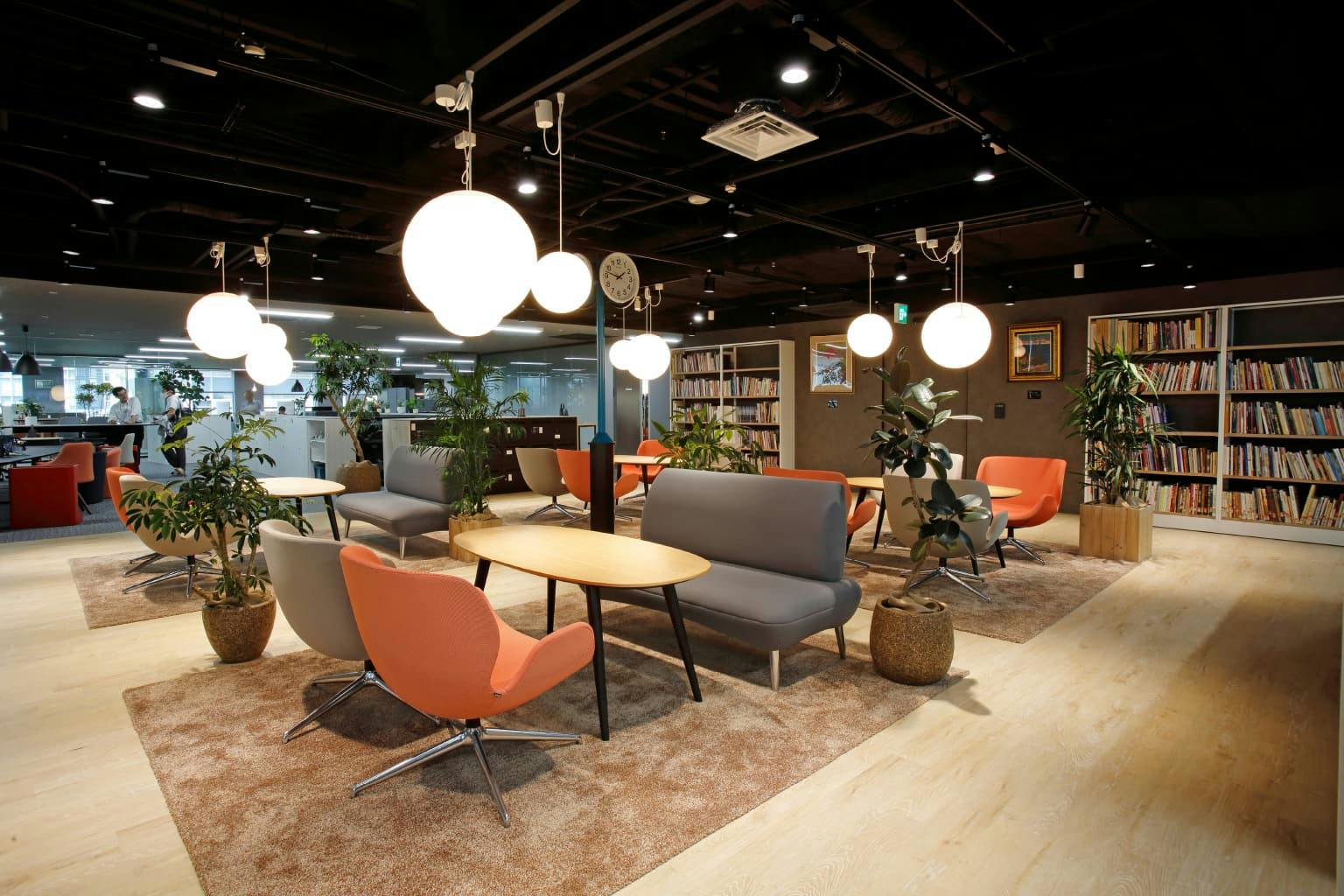
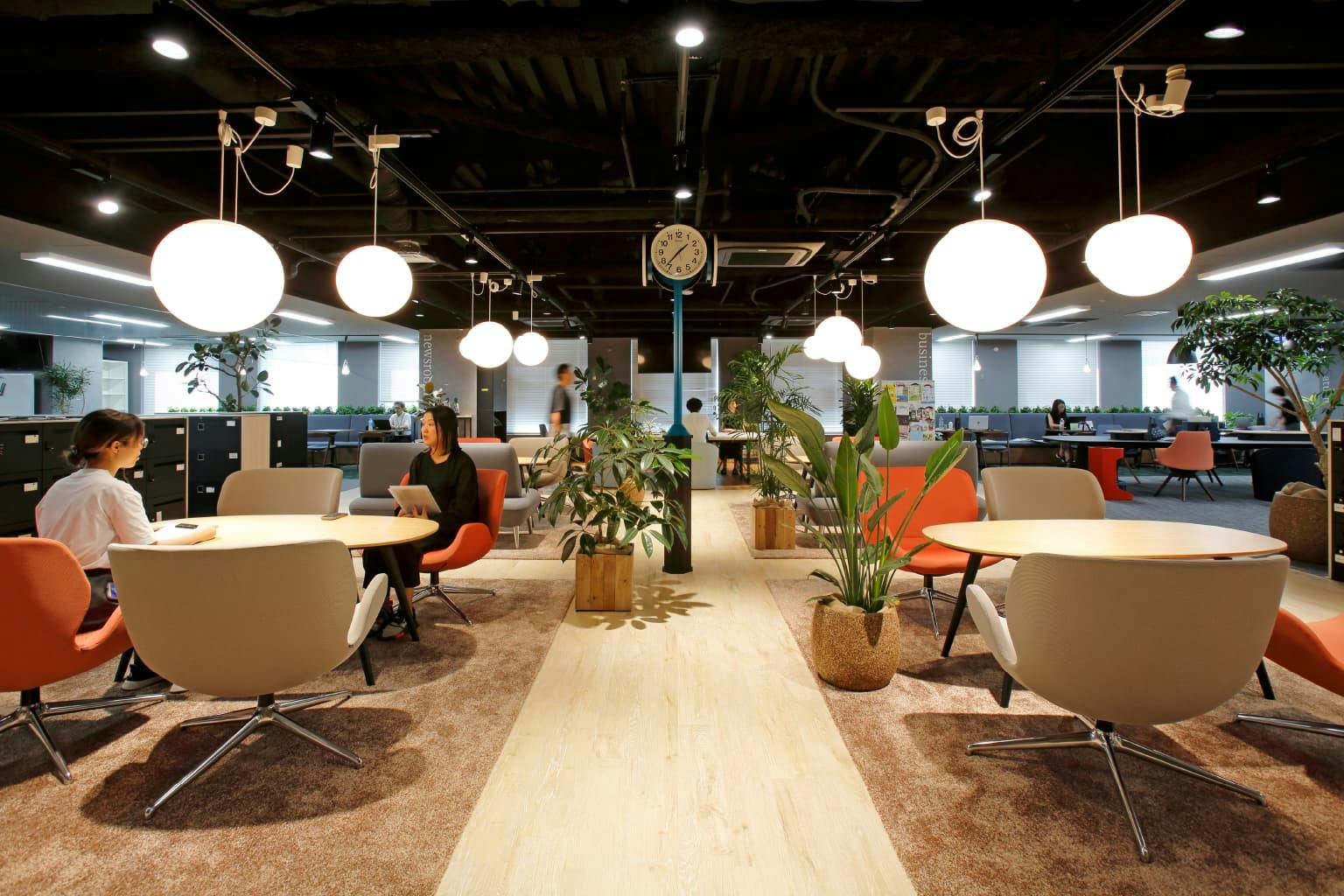
Sit on the lounge sofa in the middle of the floor and you can see the work areas on both sides. There are almost no partitions, and that, the designers say, is the point: when you can see what others are doing, it becomes easy to call out to them. People from departments who never used to pass each other in the corridor now talk.
Getting there meant changing habits as well as furniture. Okamura ran repeated workshops on reducing documents, newspapers were gathered into a single storage point, and recycled materials were used for furniture and finishes.
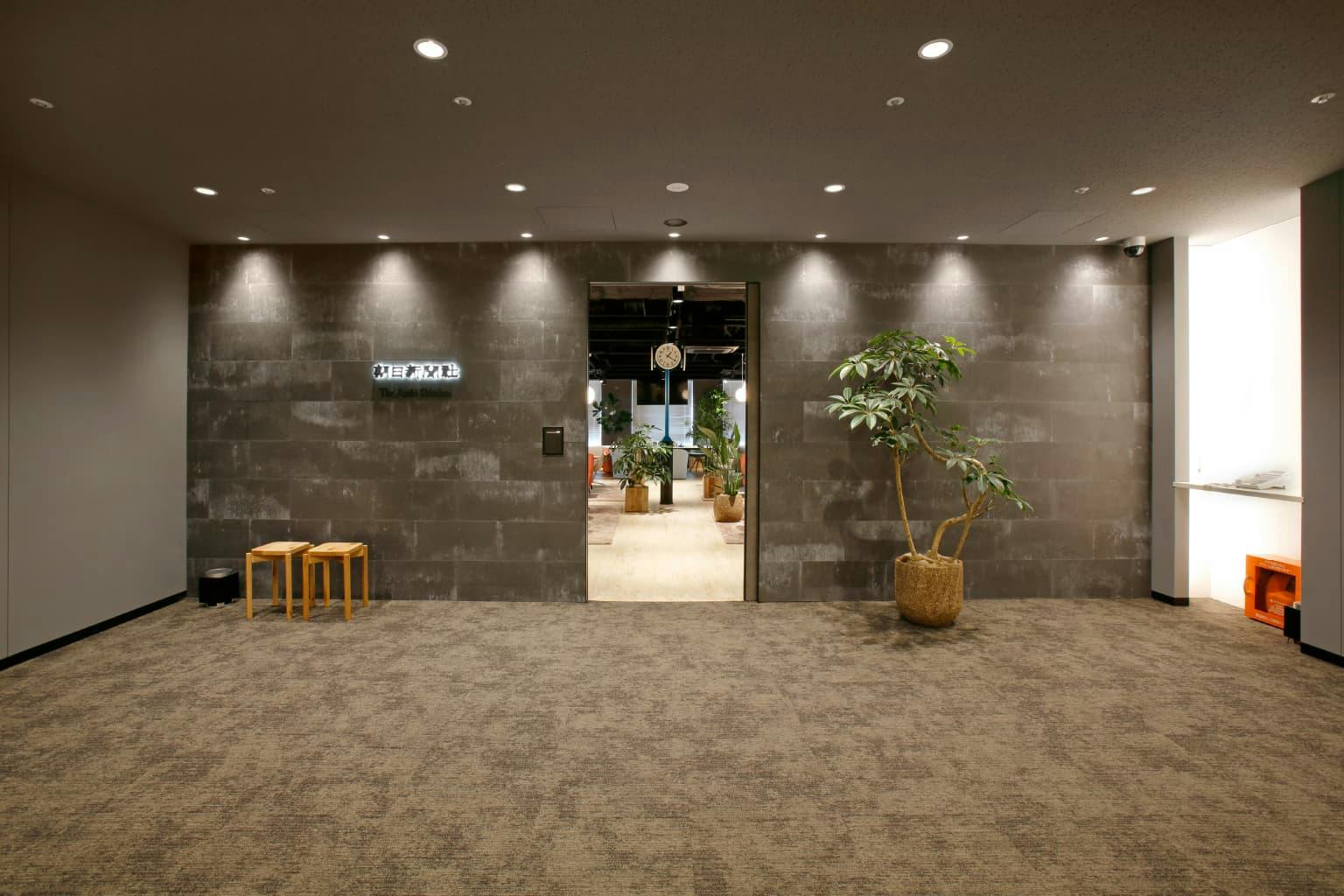
01 · Entrance and lounge
A living room in the middle
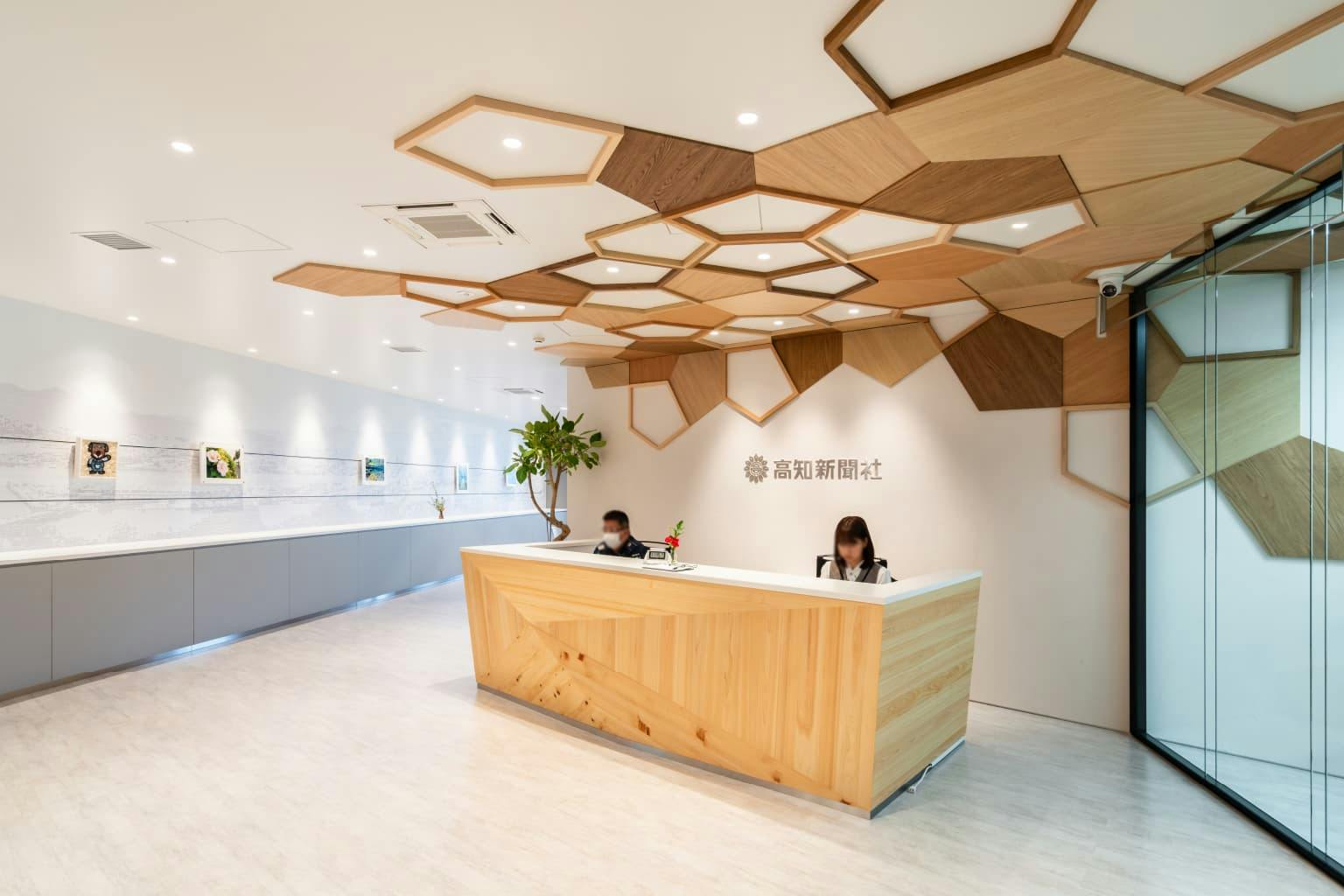
The lounge at the centre of the floor is the heart of the new layout — the place where casual encounters are meant to start.
02 · Work area
Free address and a glass room for managers
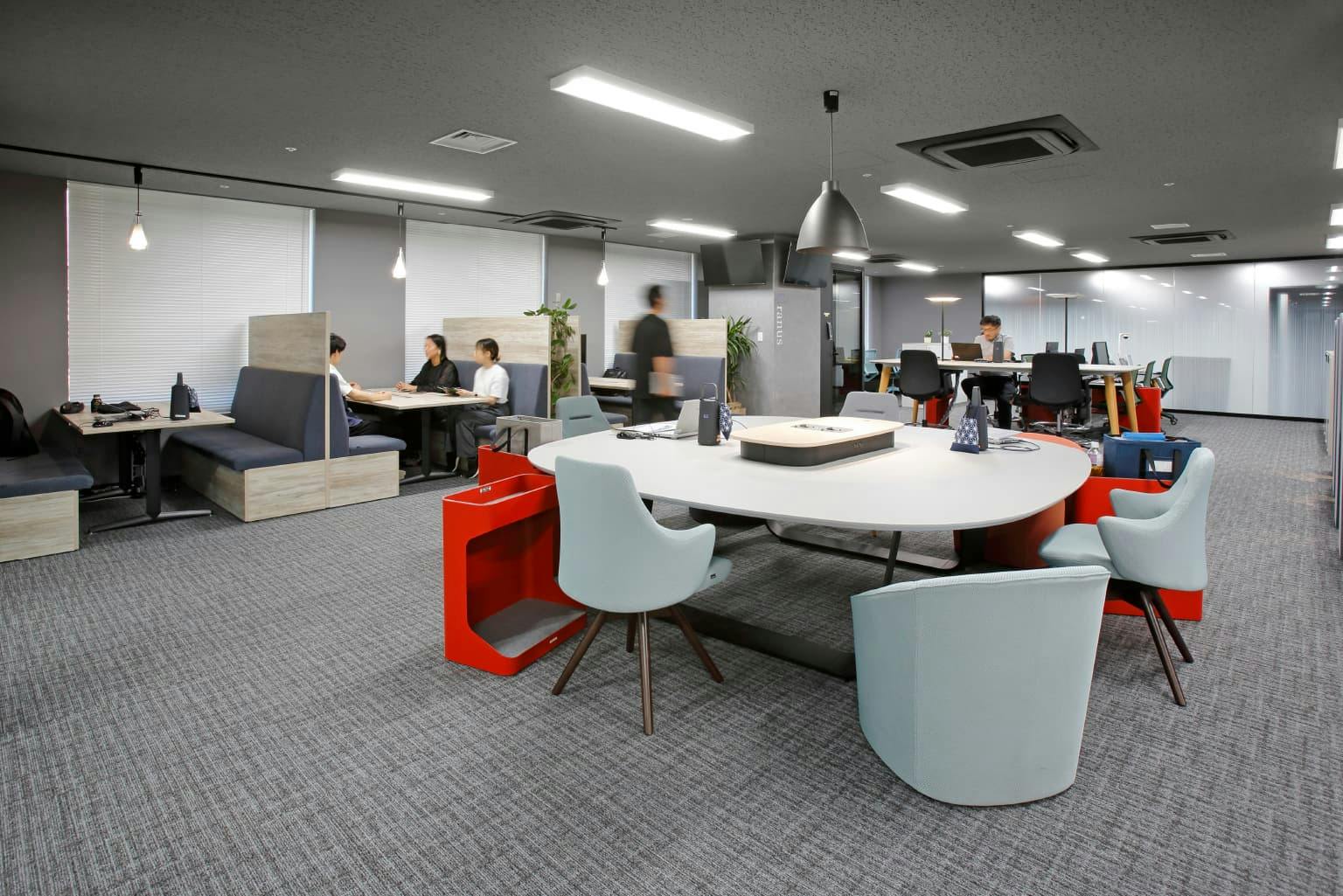
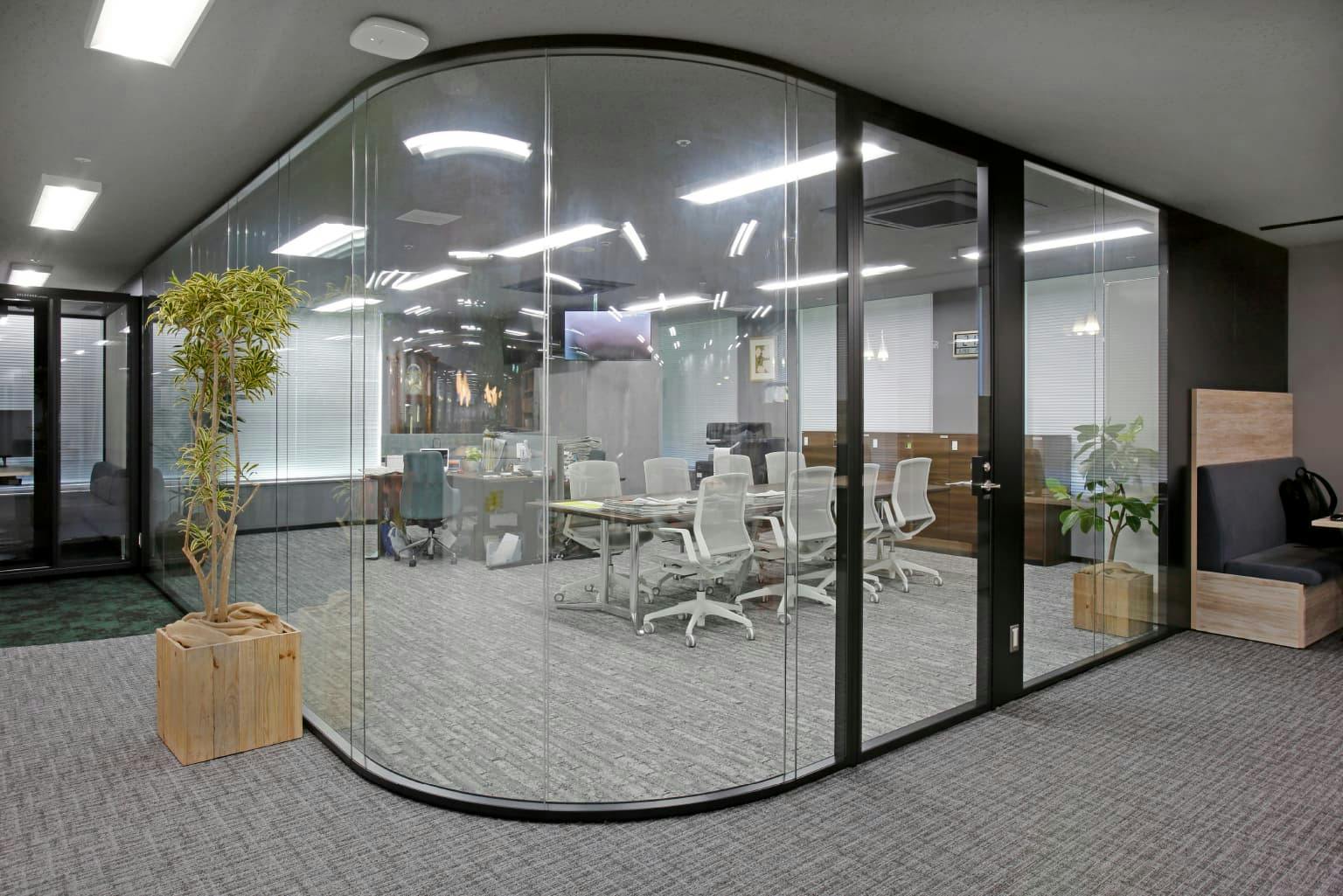
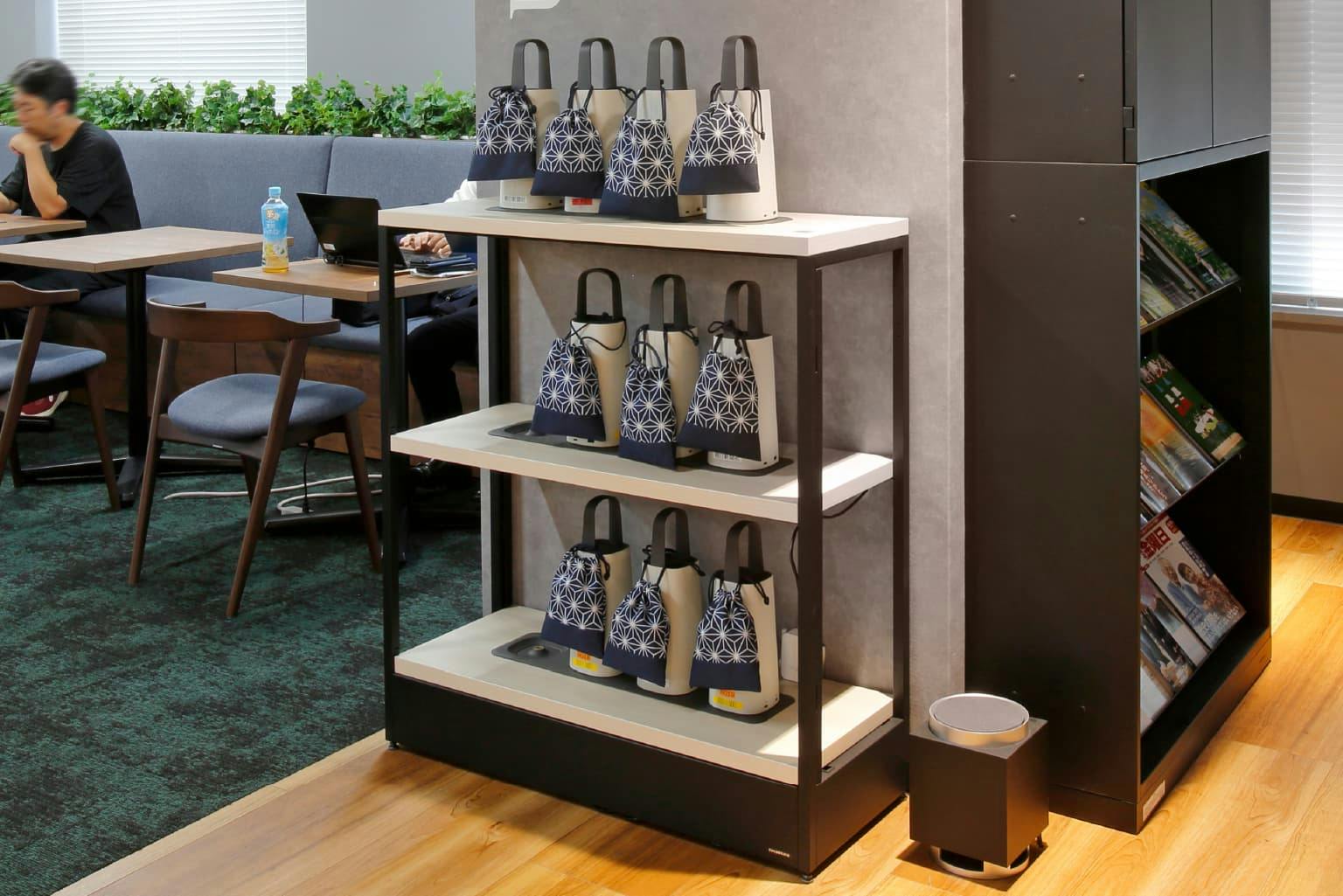
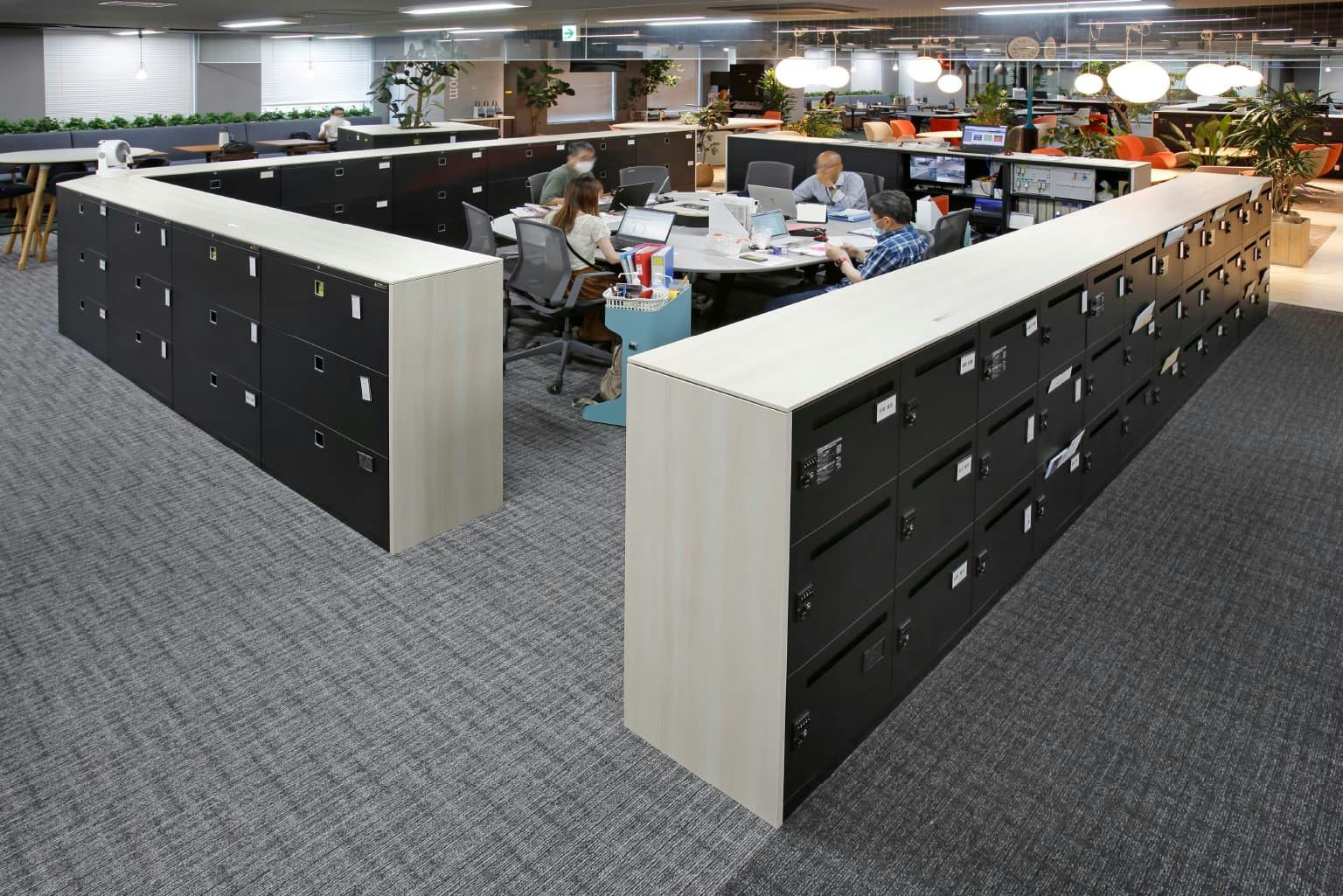
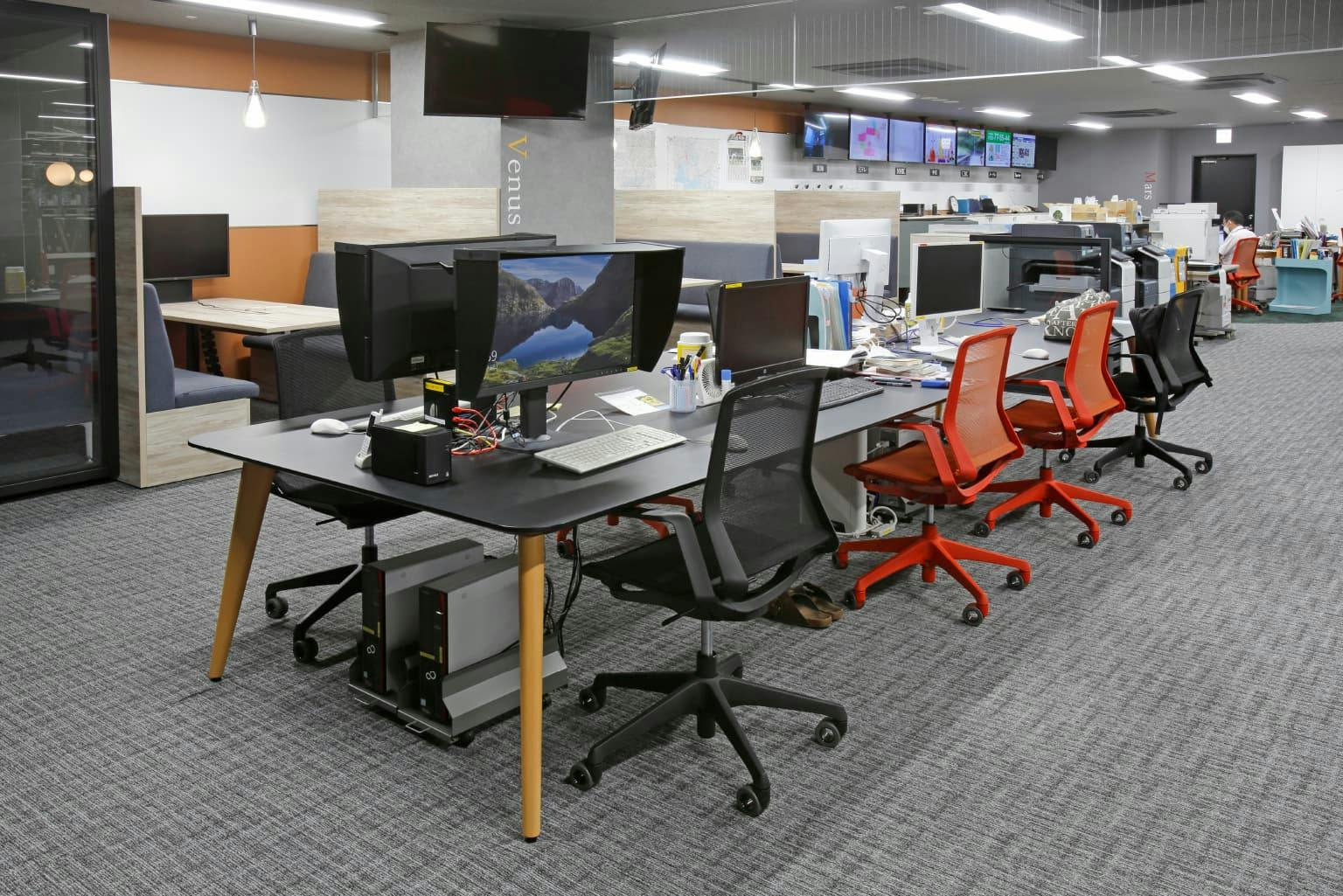
Seats are free address. Belongings go into personal lockers, so nothing is left on the desks. Managers’ rooms, once on separate floors, were combined into one management room; it had to be private because of confidential information, so its walls are entirely glass.
After the renovation, the work area has even been opened up for children’s workshops.
03 · Ways to work
“Where shall I work today?”
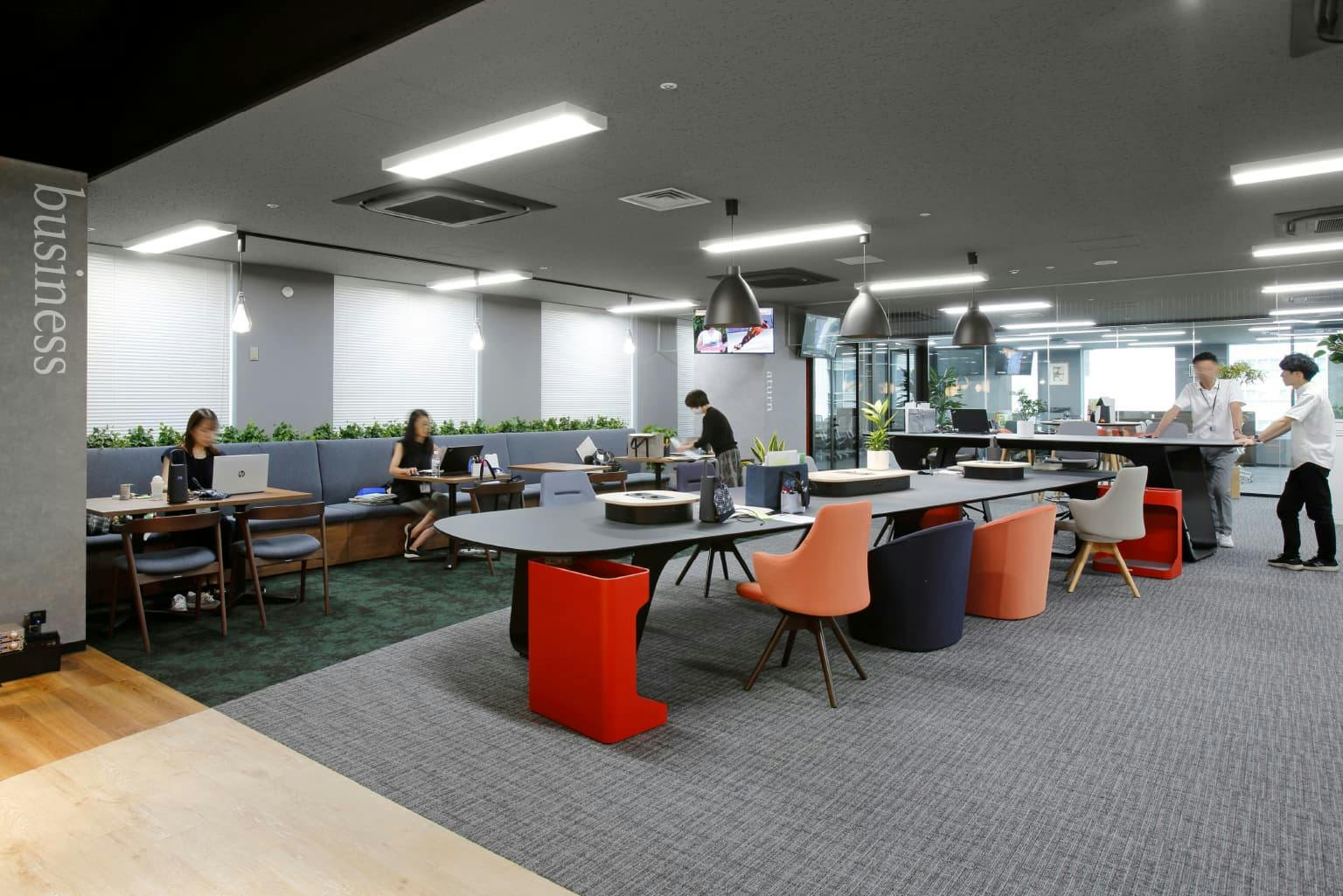
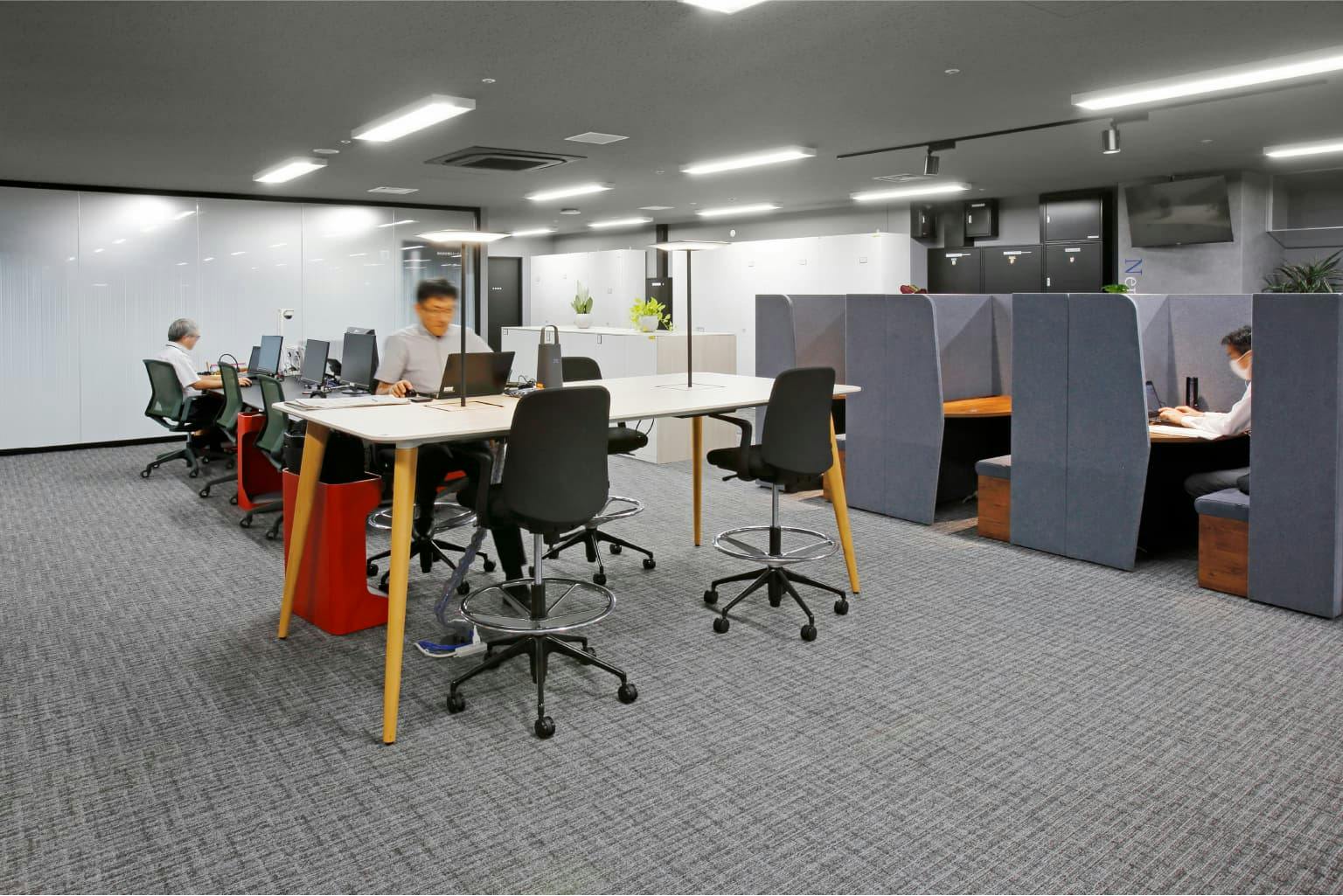
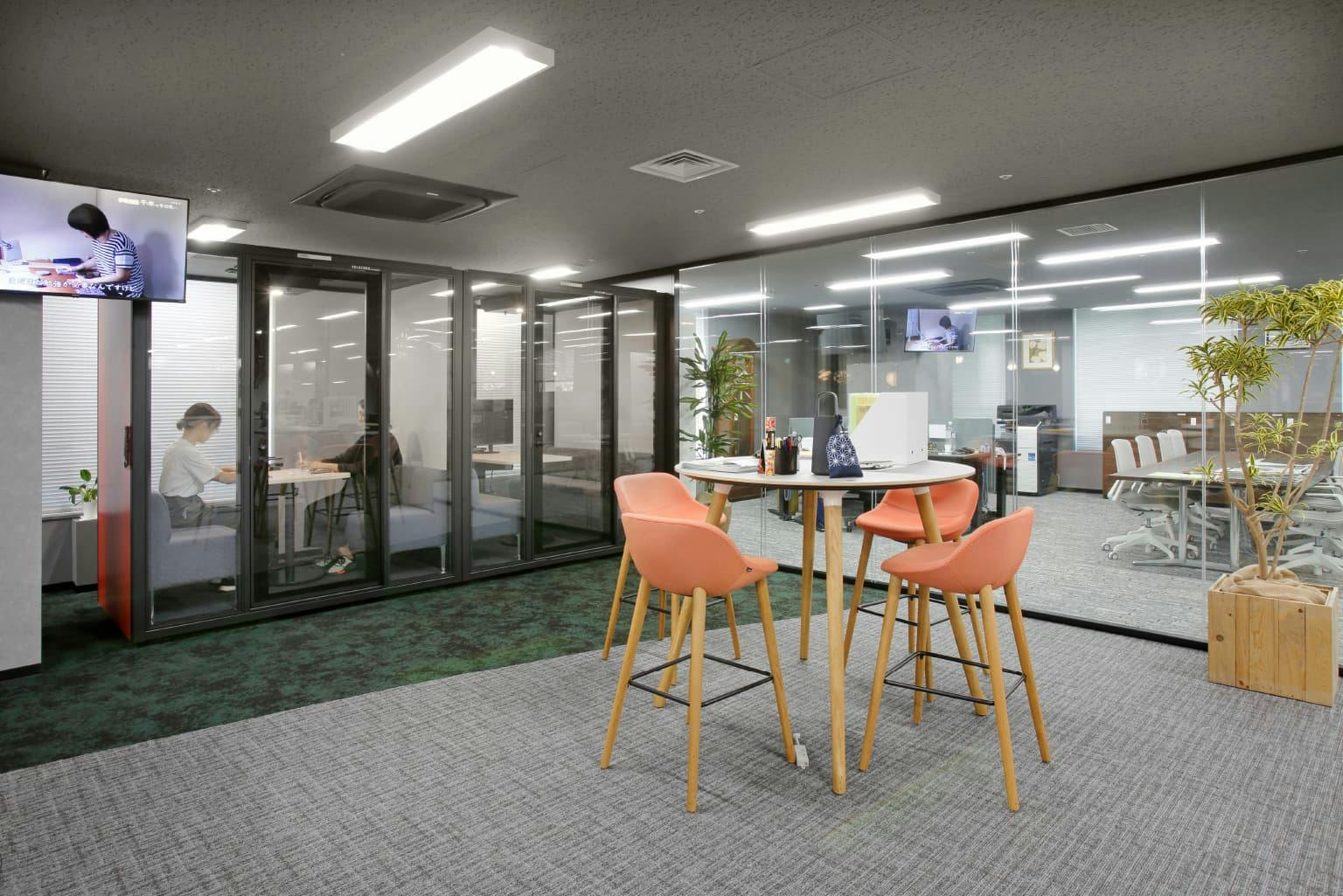
Work booths with partial screens help concentration; sofa seats by the window have plants. At big tables of different heights, reporters are often seen talking standing up and taking notes on the spot.
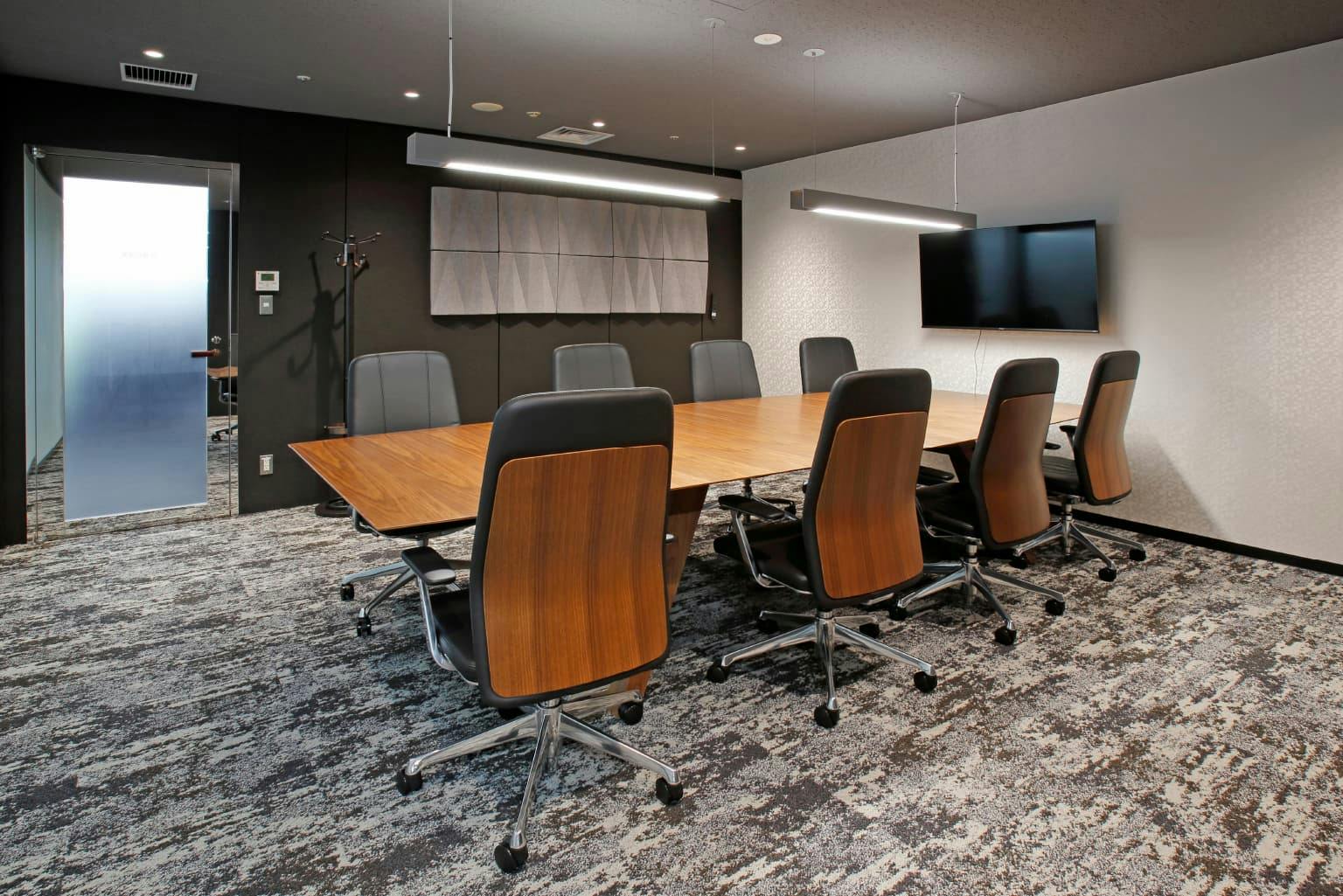
Meetings happen in fully closed booths for web calls or in open meeting spaces. Important guests go to a reception meeting room with frosted, sound-insulating glass. Since the renovation, more people settle things quickly in the open instead of booking a room.
04 · What stayed
Six desks around one table
The group company’s business-support team still works with fixed members, but its area is divided by lockers rather than walls.
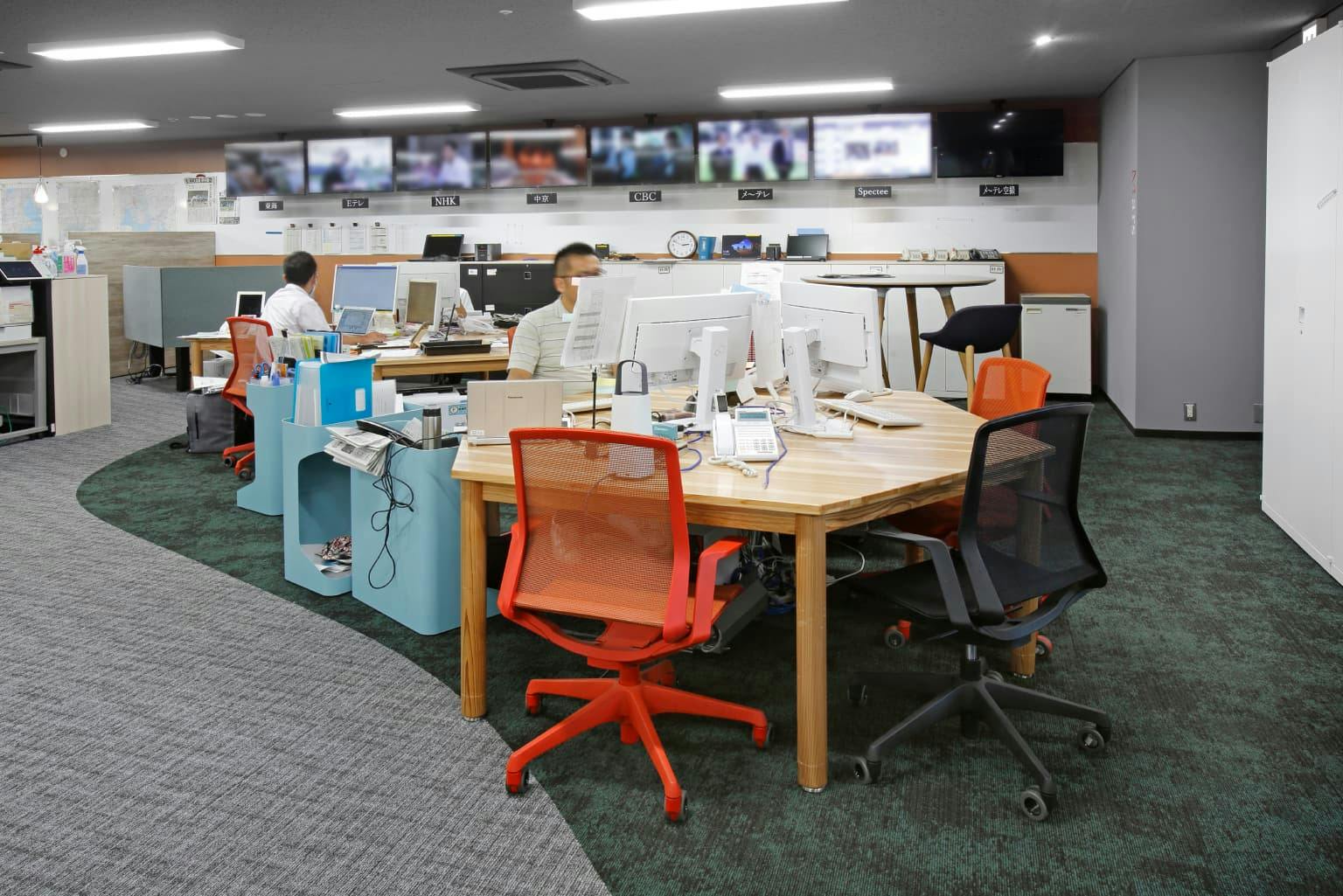
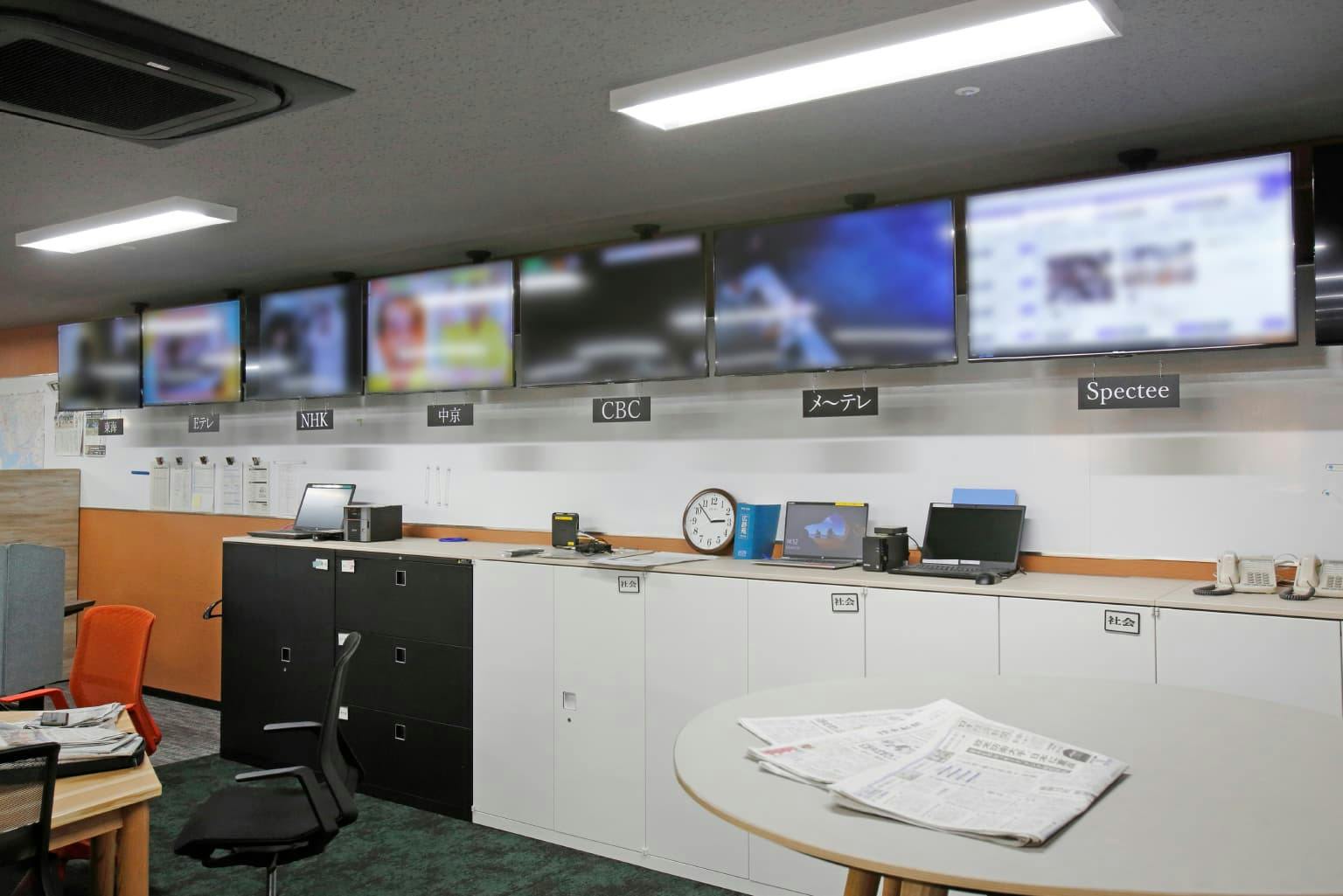
In the editorial bureau, where reporters and video photographers use specialist equipment, some areas use group address. The editors on the desk work at distinctive hexagonal tables — a form inherited from the days before computers and word processors, when the desk worked in teams of six.
 NEW
NEW NEW
NEW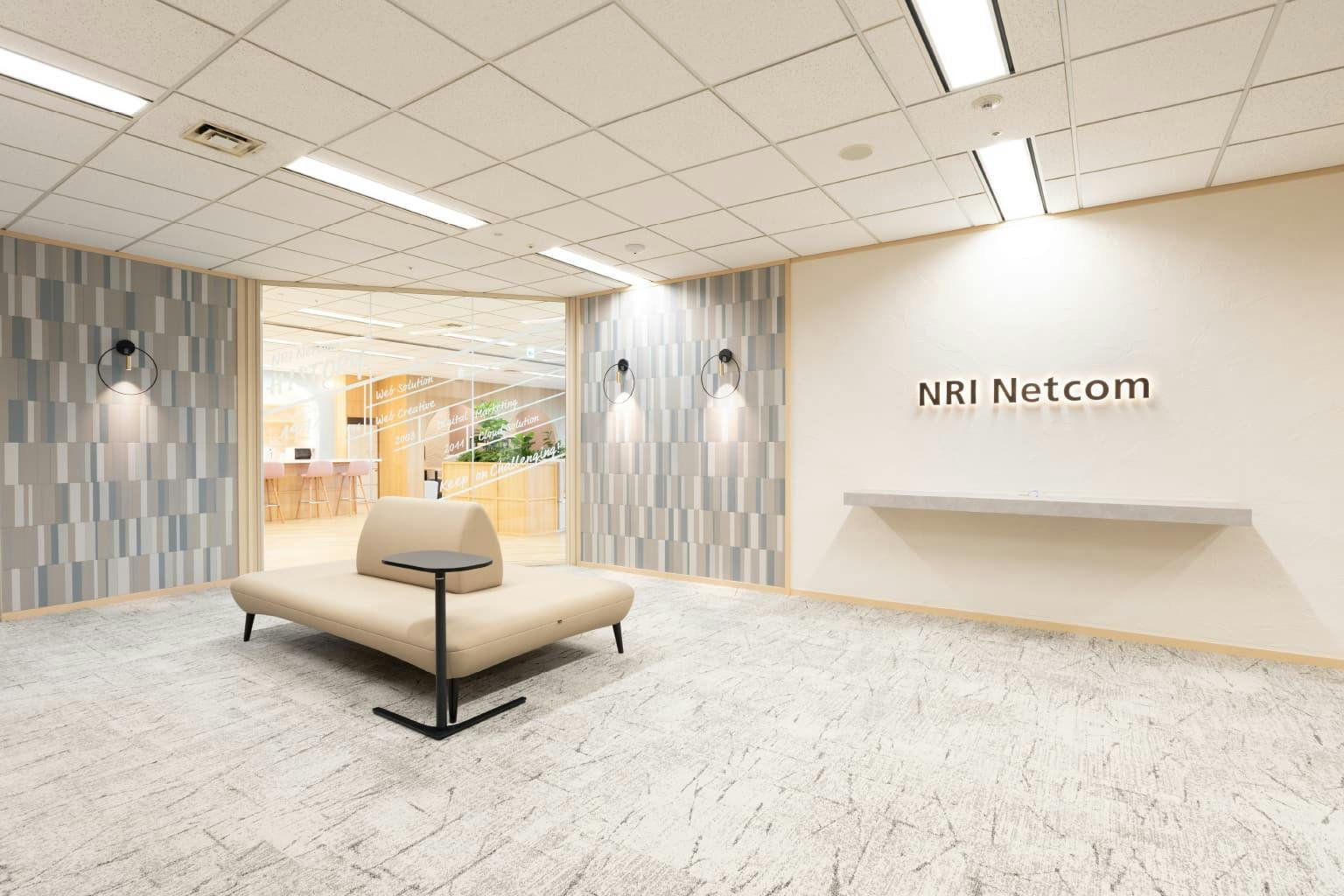 NEW
NEW