 JAPAN'S WORKPLACES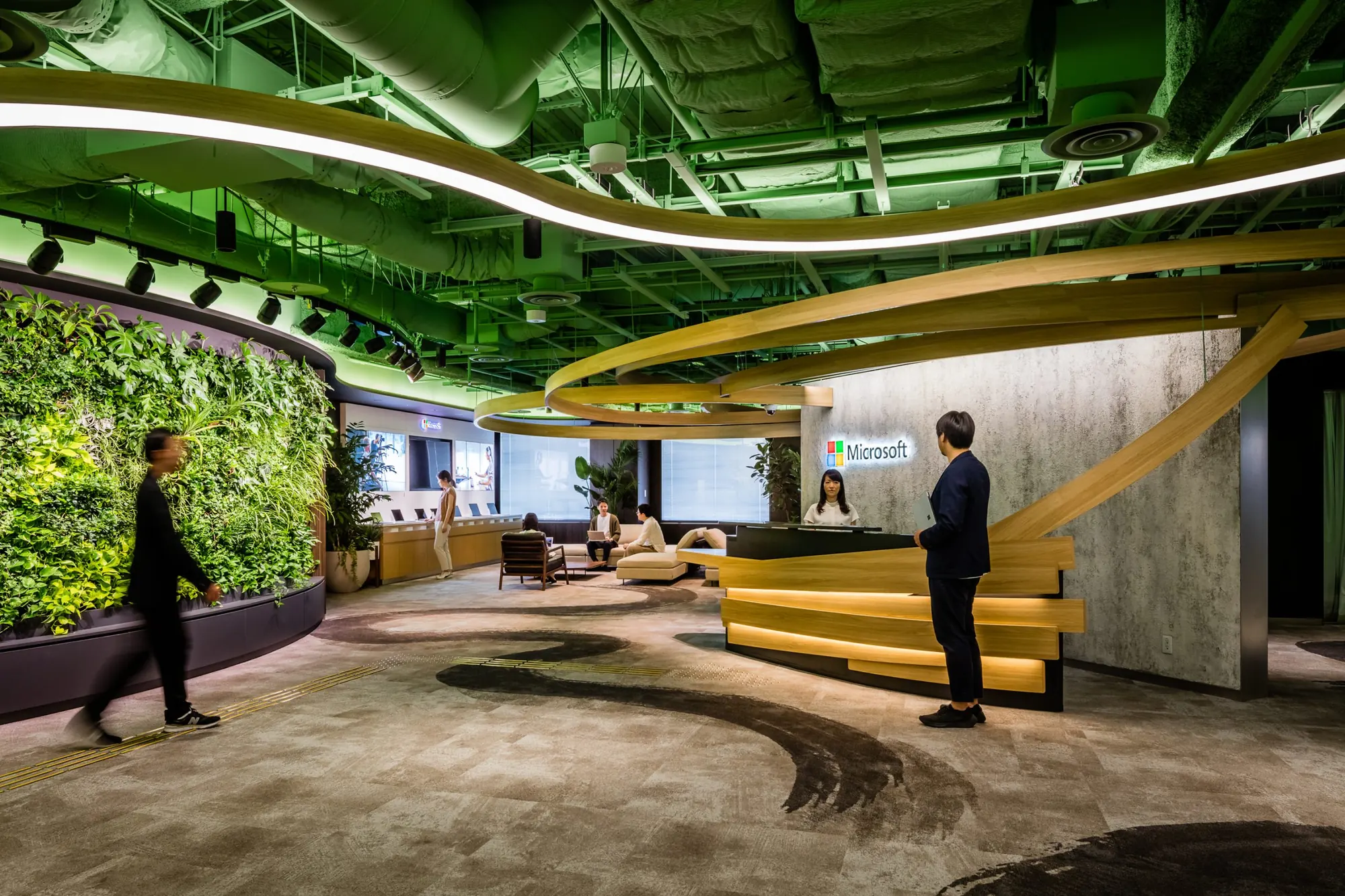
Concept
An office that empowers people
Microsoft Japan’s work-style reform has a long paper trail: work from home in 2007, no core hours and formal telework in 2016, a cross-company Work Style Innovation team in 2018, and in summer 2019 a trial of four working days and three days off. The Shinagawa renovation began at the end of 2018 and absorbed everything the pandemic taught before it finished in June 2022.
The concept is “an office that empowers people”: a place to practise hybrid work and to show customers what it looks like.
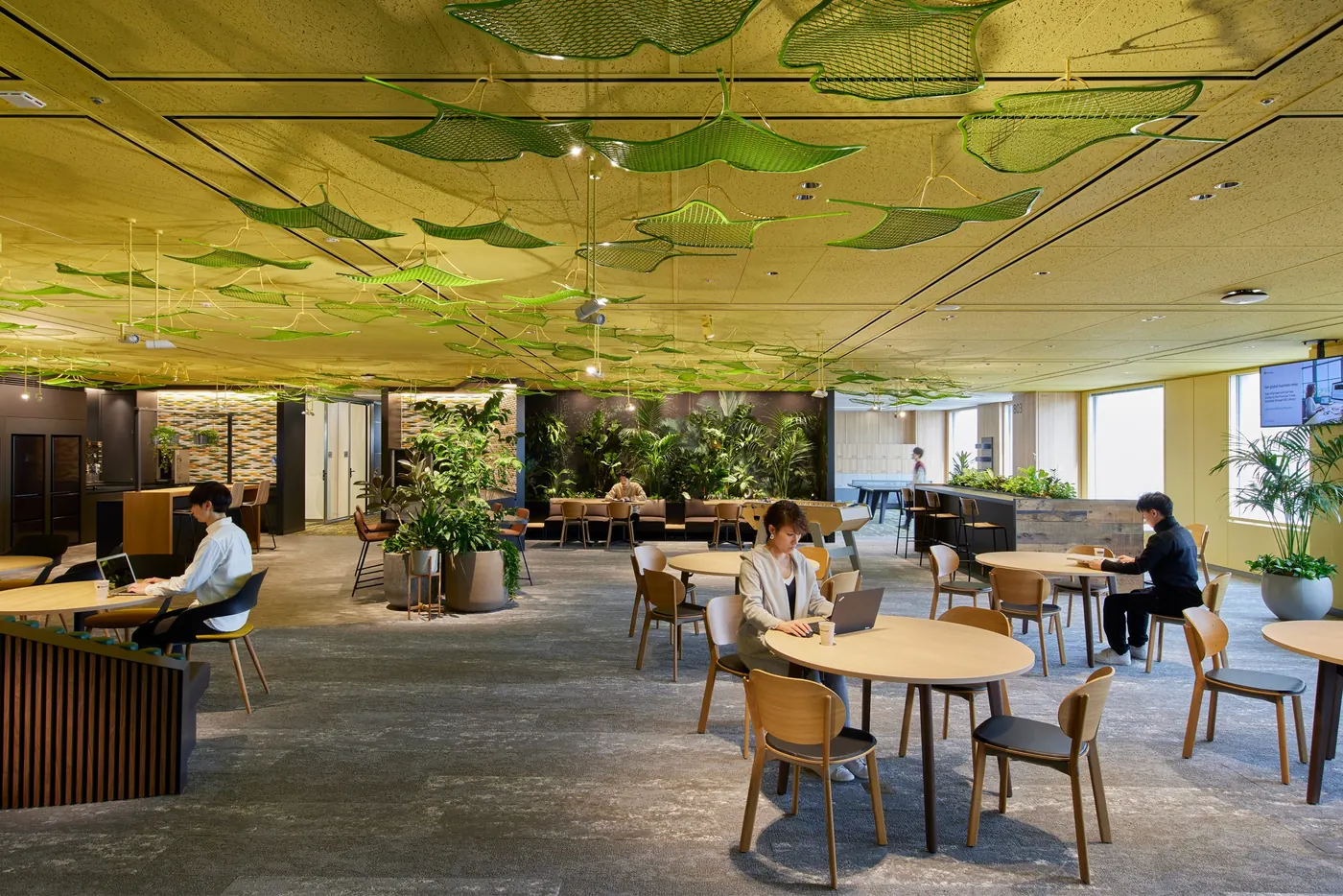
01 · Reception
Hexagons, a factory and a corridor of lattice
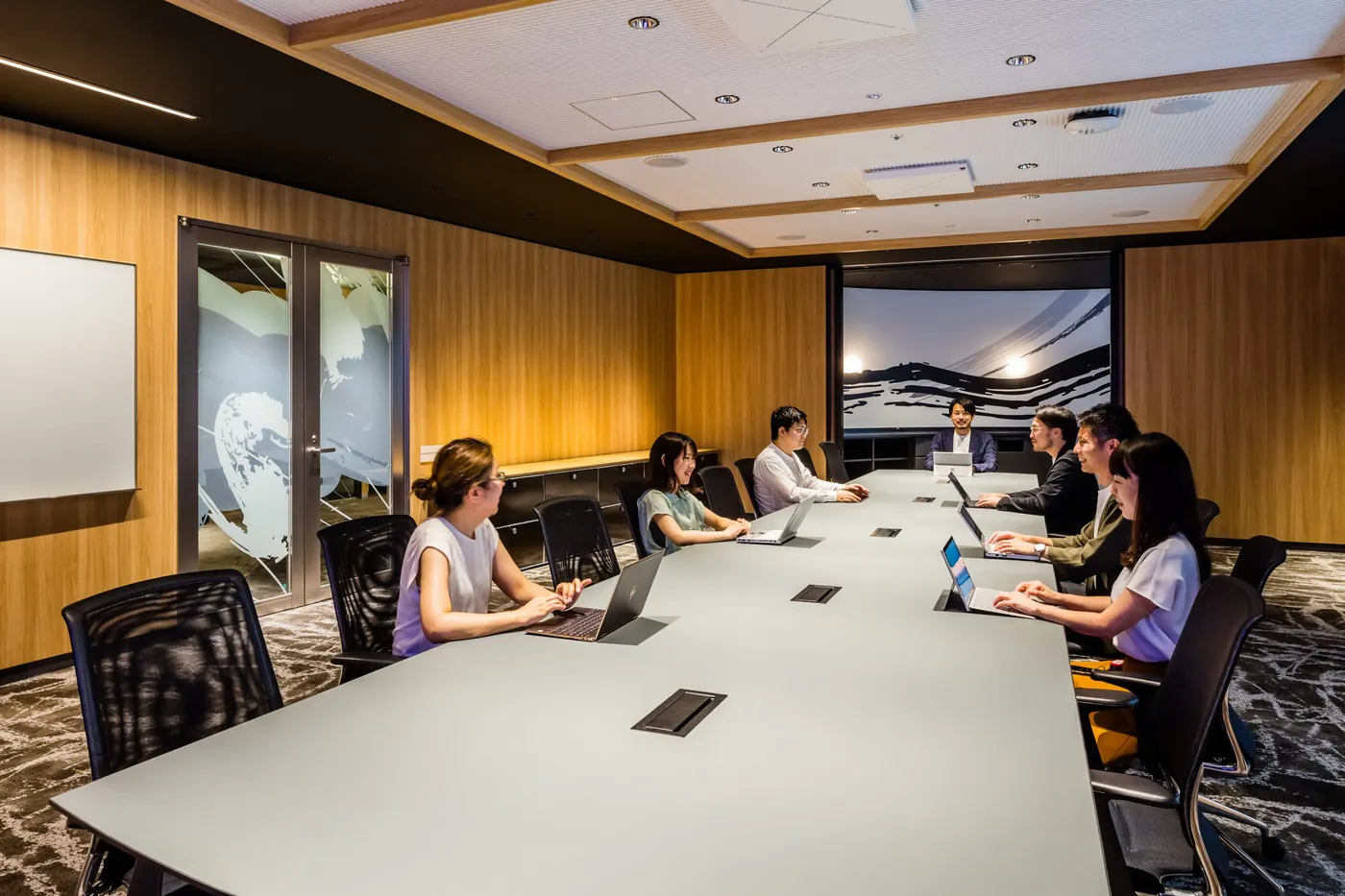
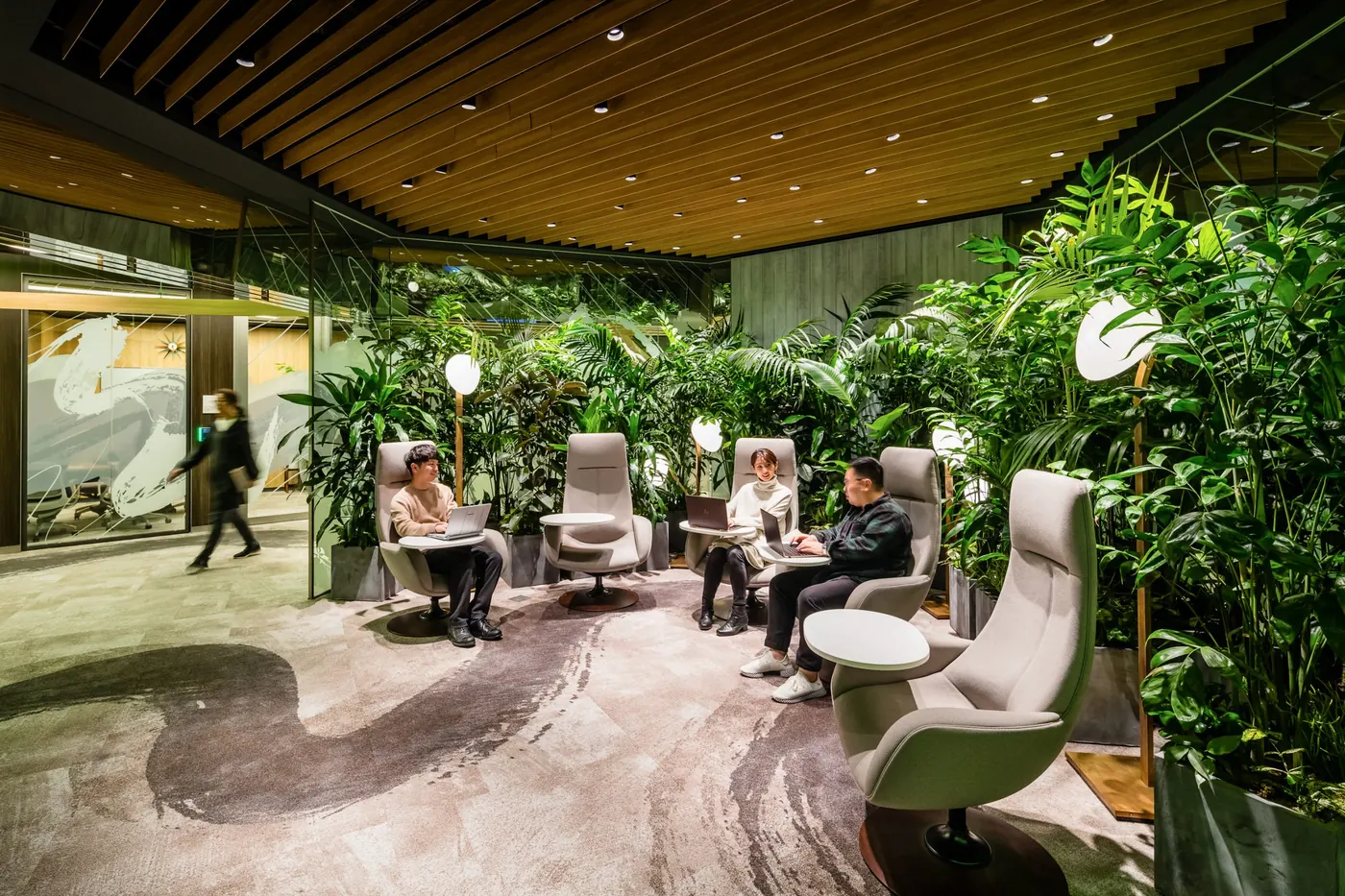
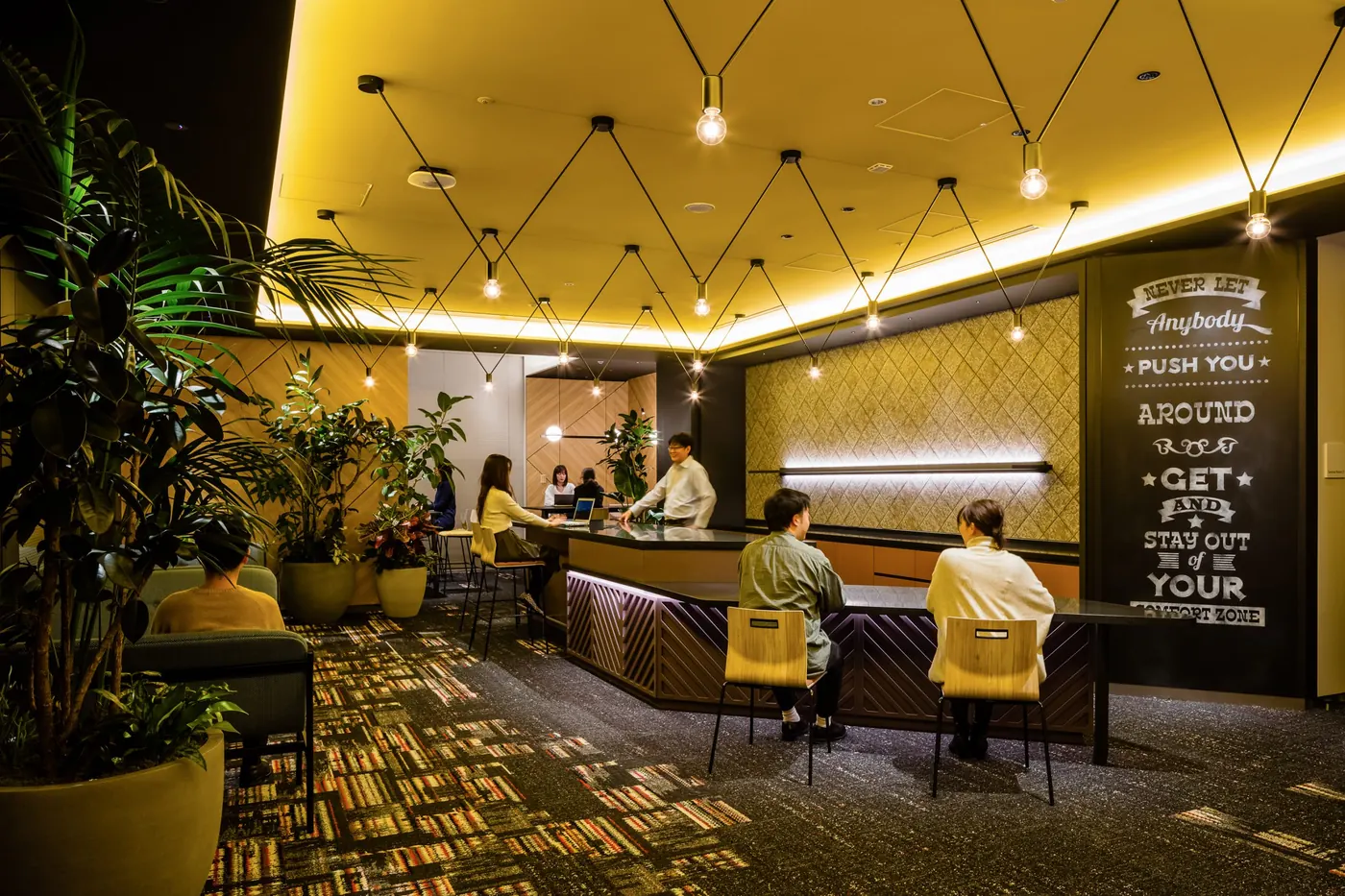
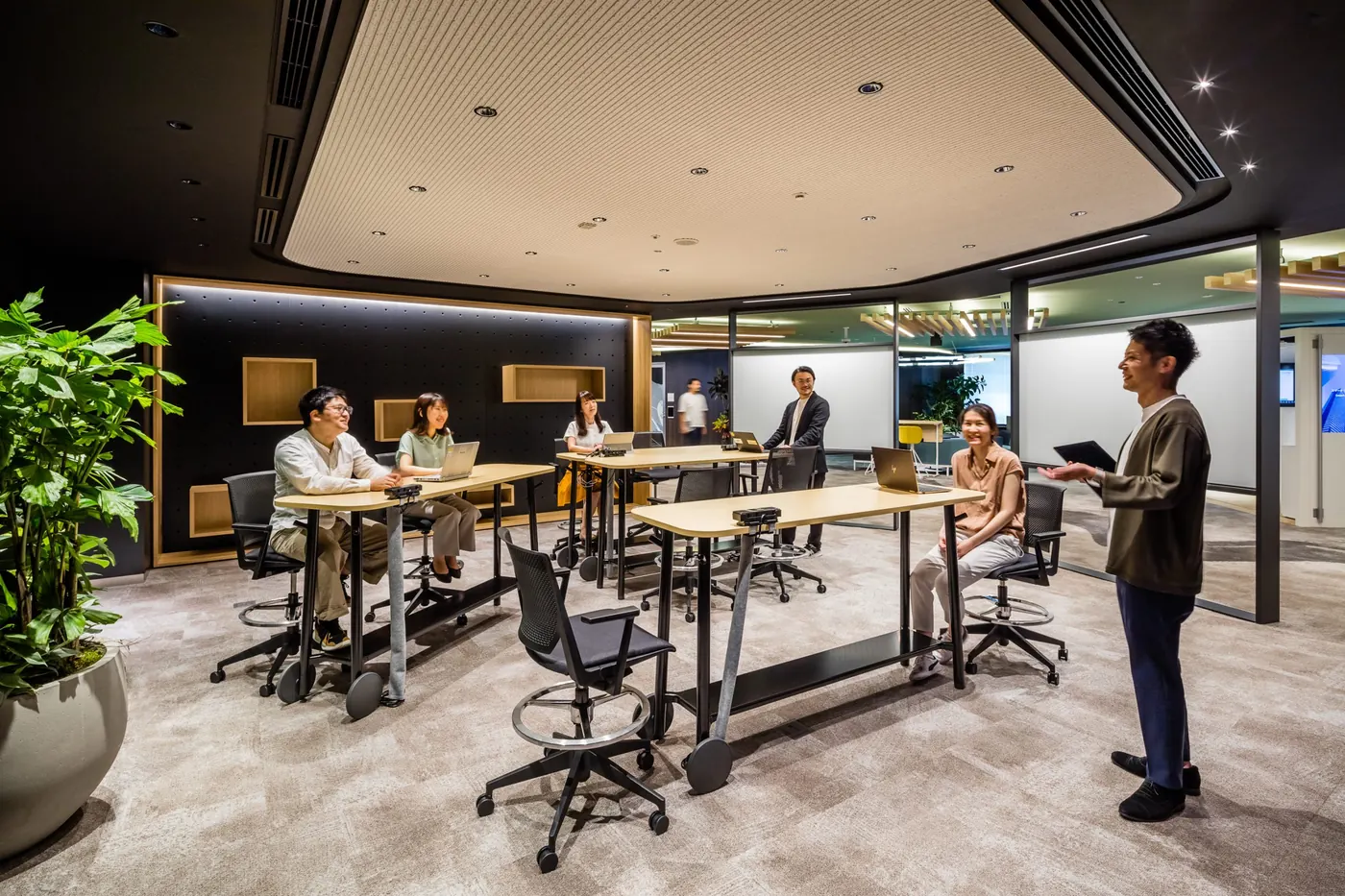
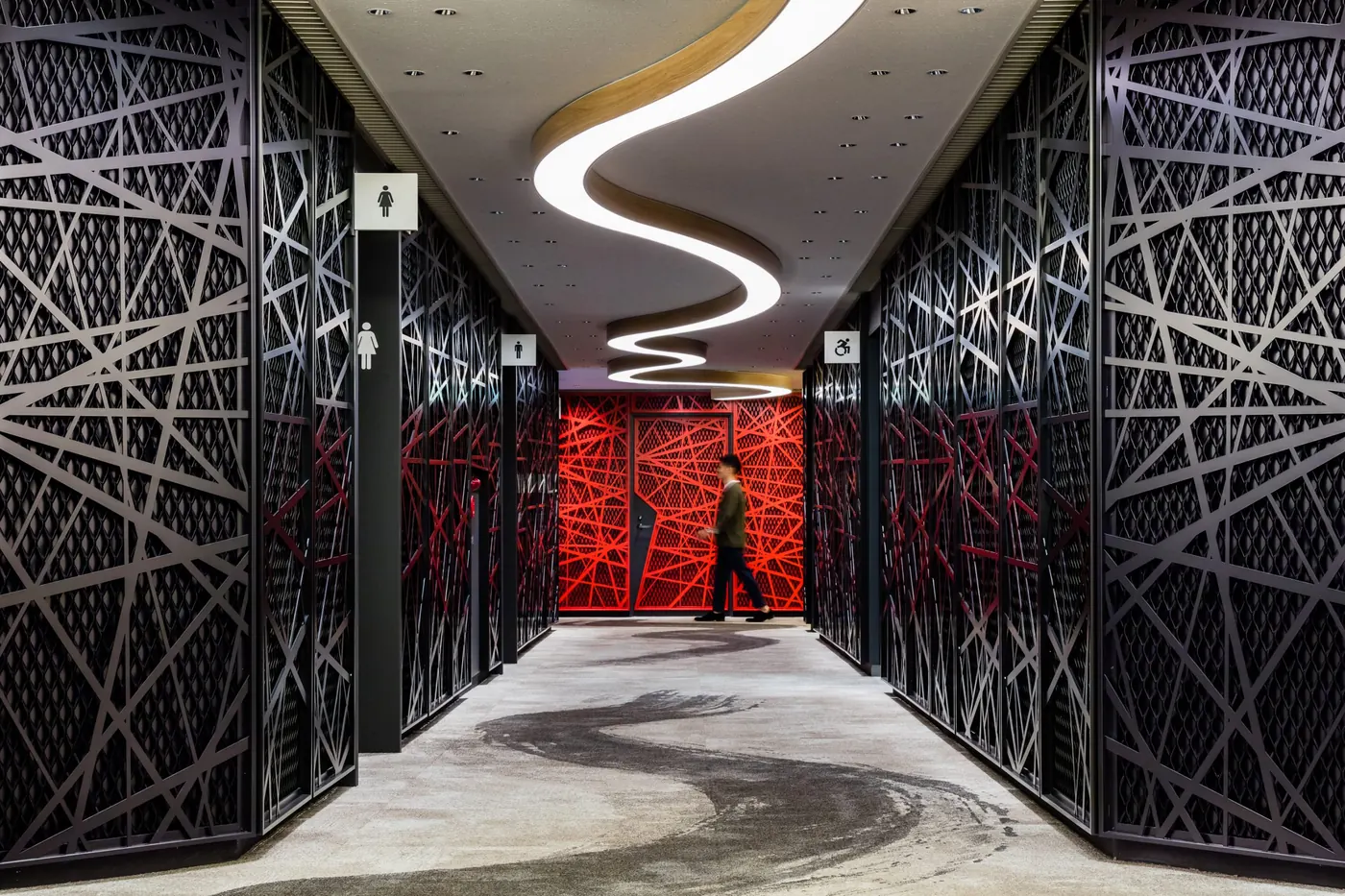
Visitors start at the main reception on 31 and a second reception on 30, both green with planted walls. Around them sit an Executive Briefing Room for leadership meetings, the six-sided Hexagon Room, a breakout space beside the multi-purpose room, the Innovation Factory for co-creation with customers, a visitor lounge, and a corridor wrapped in black lattice.
02 · Workspace
Hubs for meeting, stations for focus
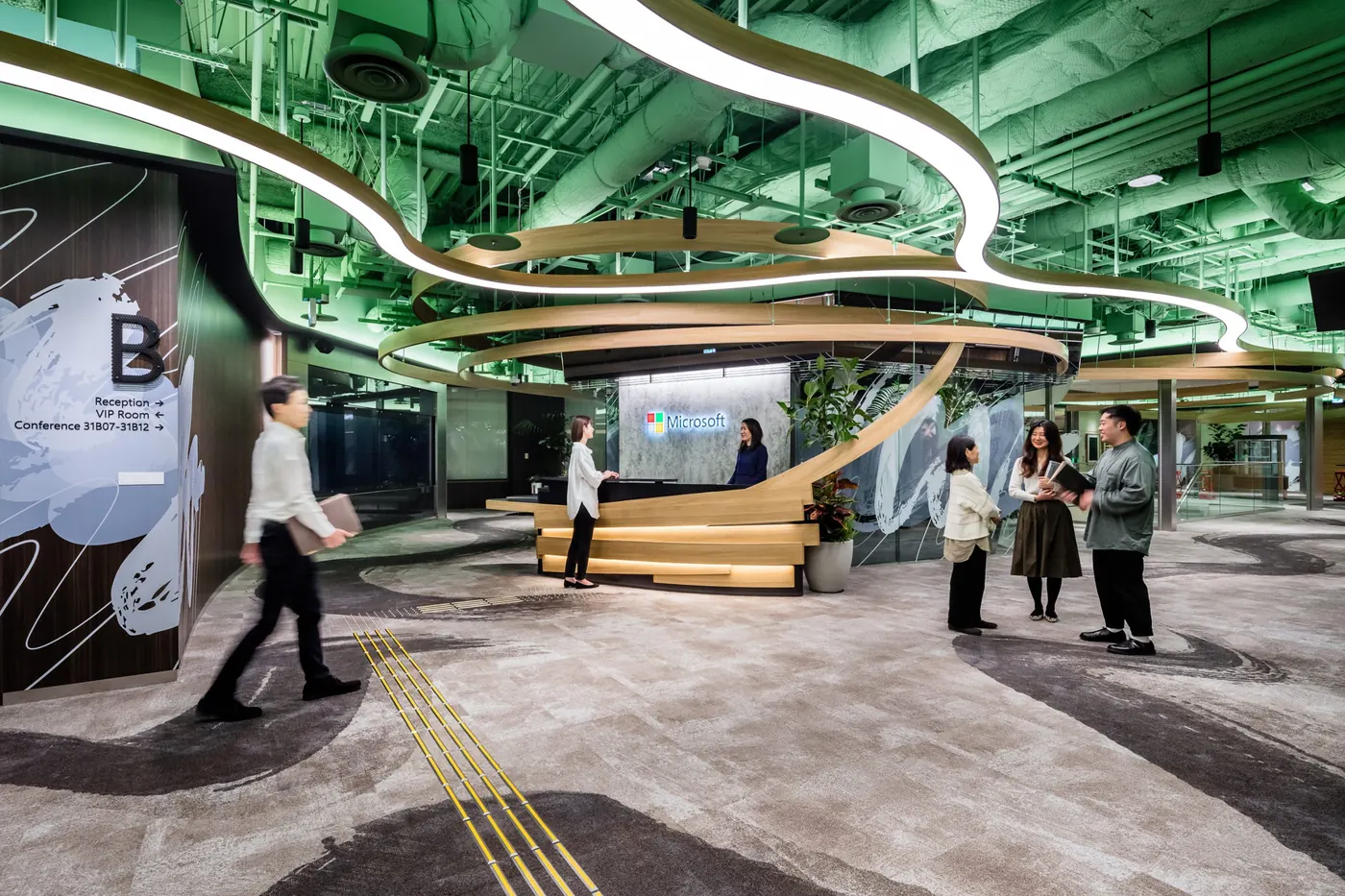
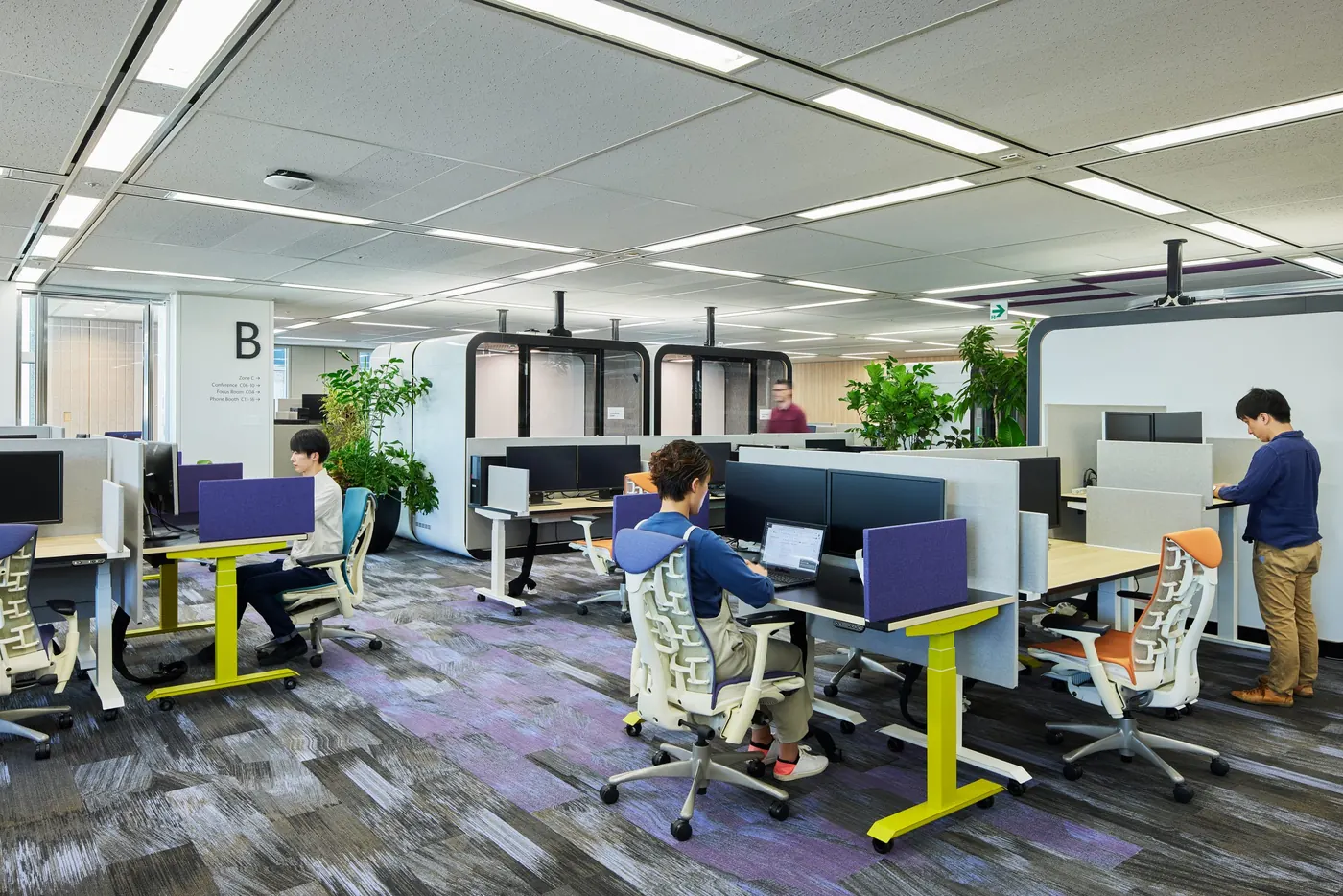
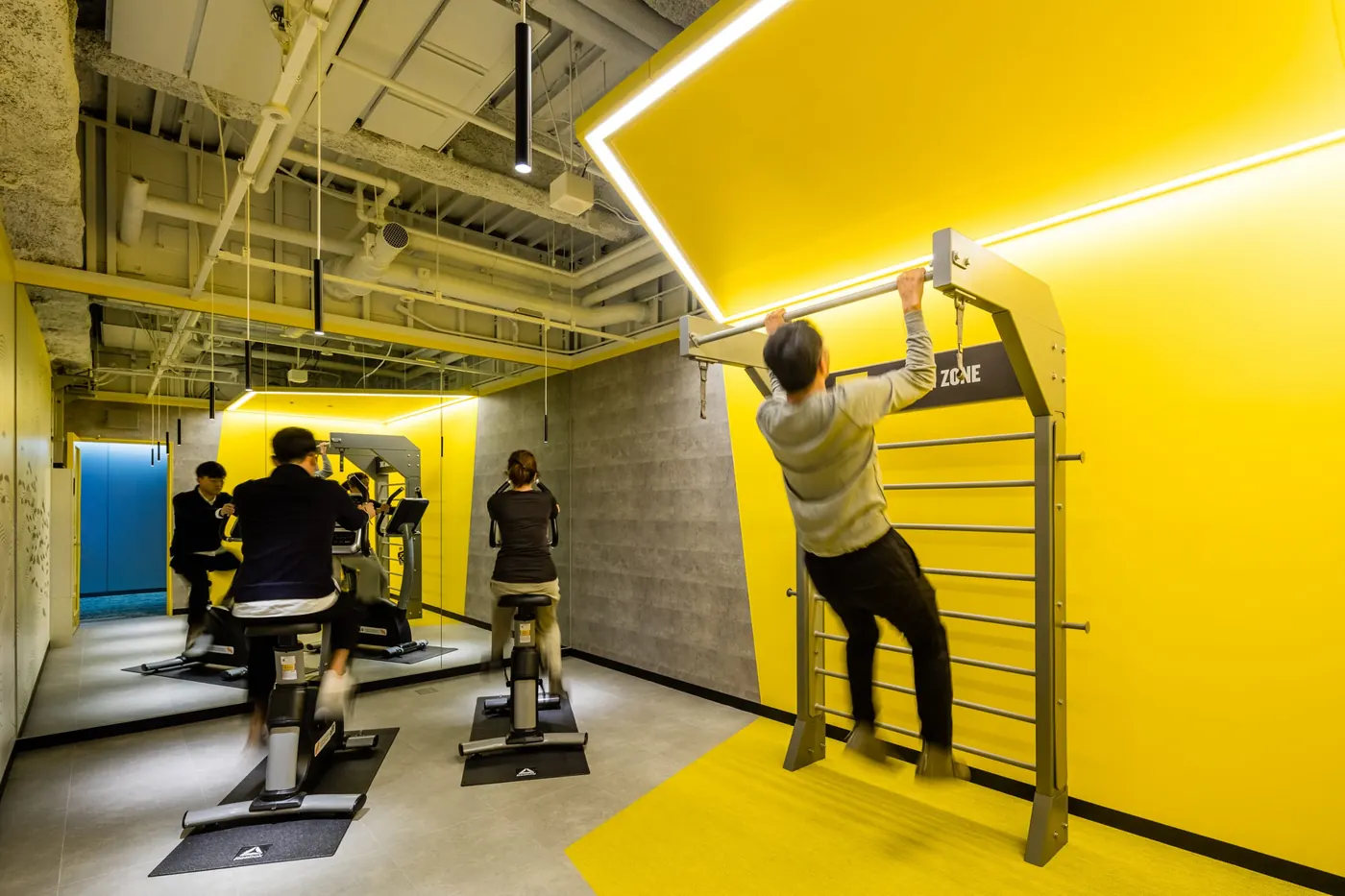
Each work floor is organised around a Hub Area — the place people come to the office for, where face-to-face collaboration happens. Around it are workstations for heads-down work and an Activity Room for standing meetings or a bit of exercise, so people choose a setting by the day’s task.
03 · Cafeteria & events
Lounges that double as meeting rooms
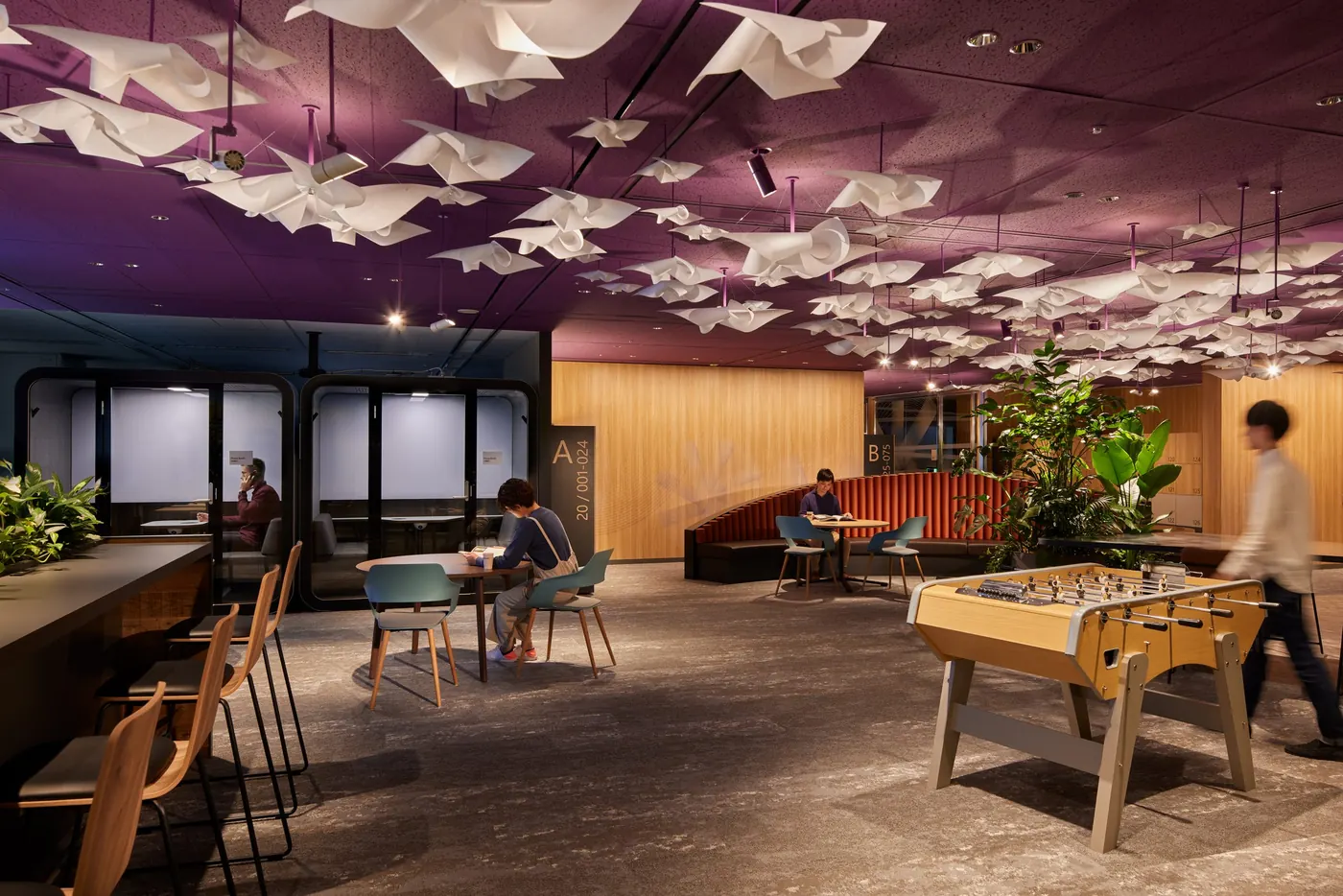
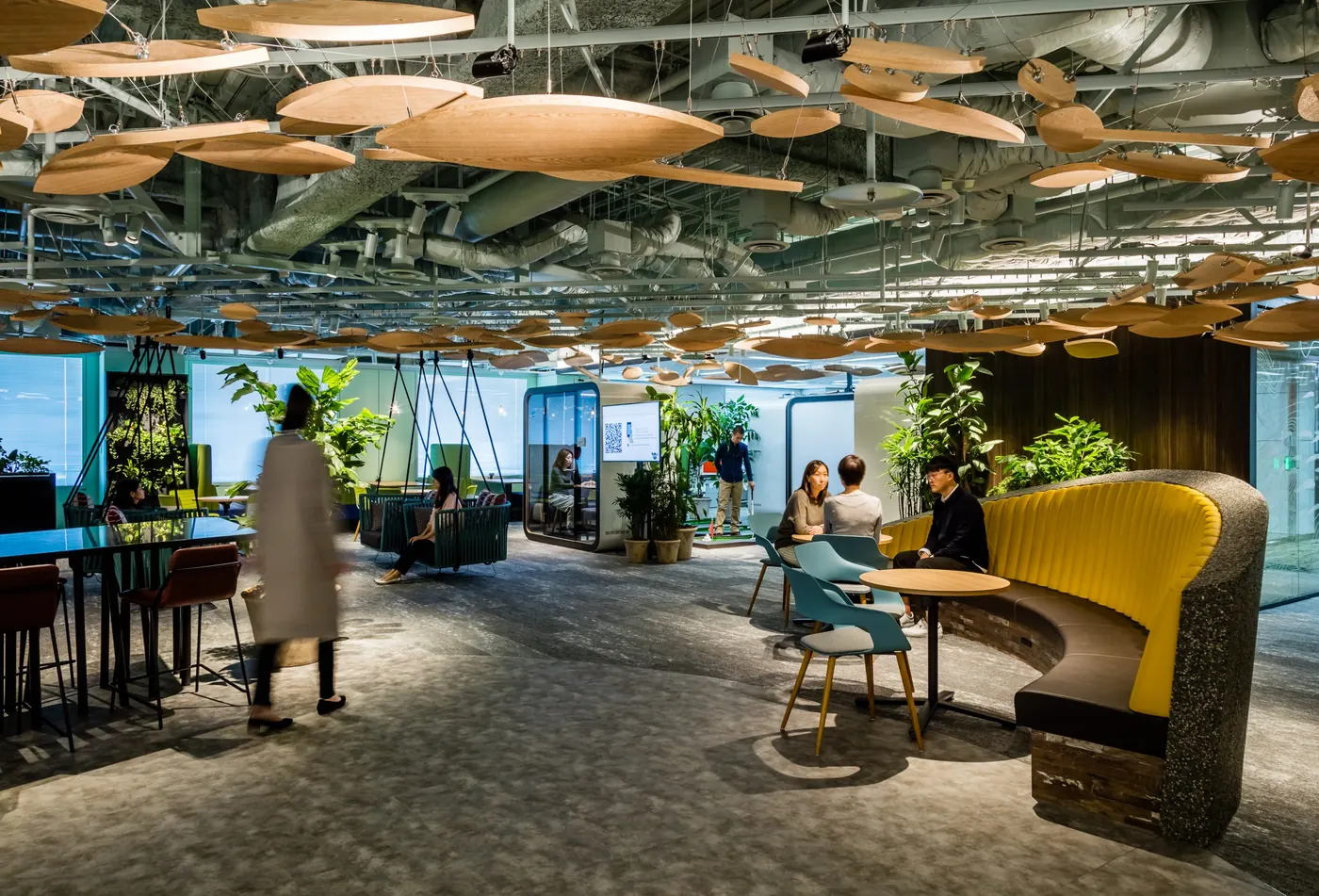
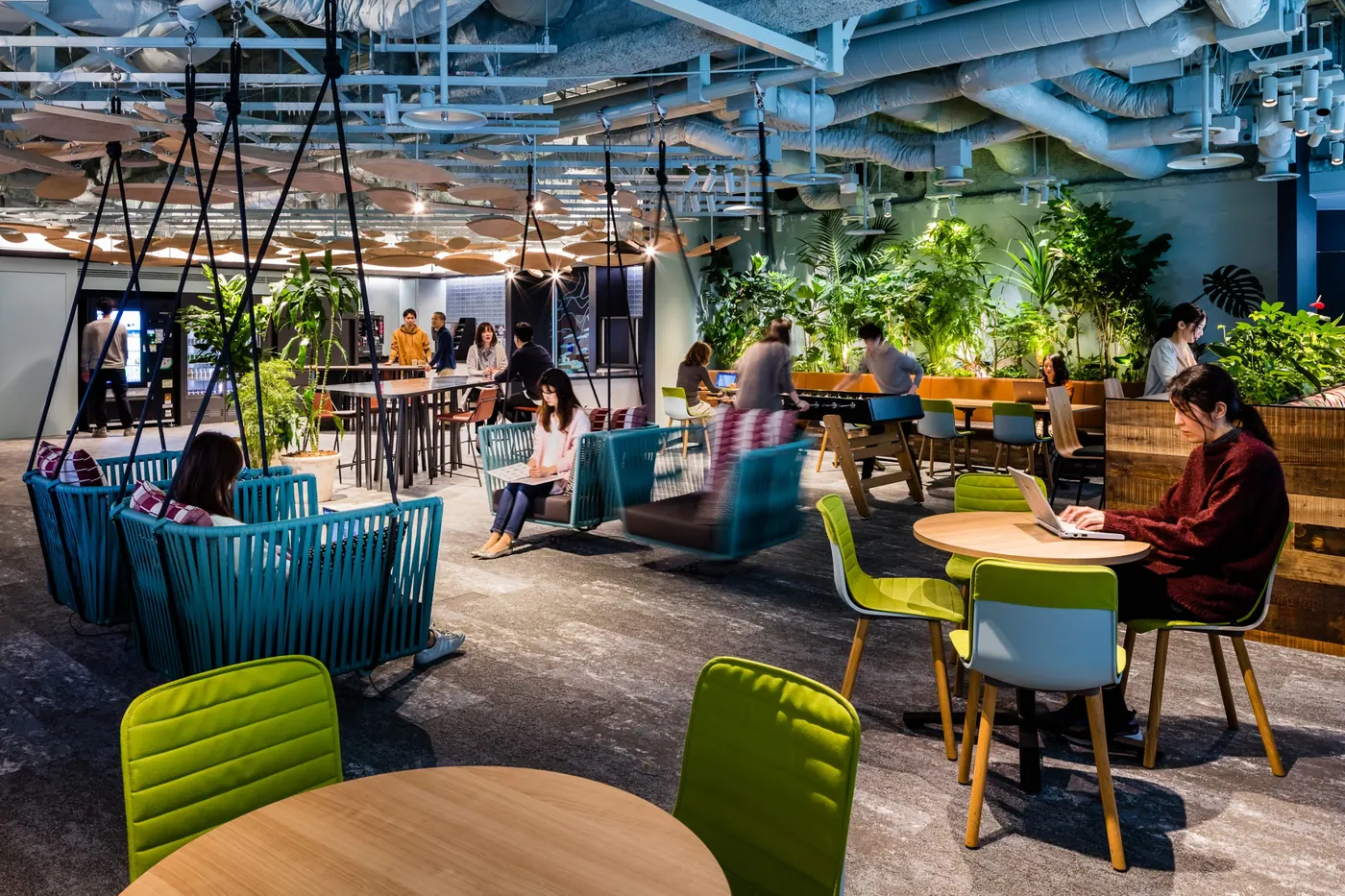
Lounges on the work floors serve for breaks, casual meetings and chance conversations; the staff cafeteria works equally as a desk, a meeting room and a place to rest.
04 · Welfare
A room with no screens
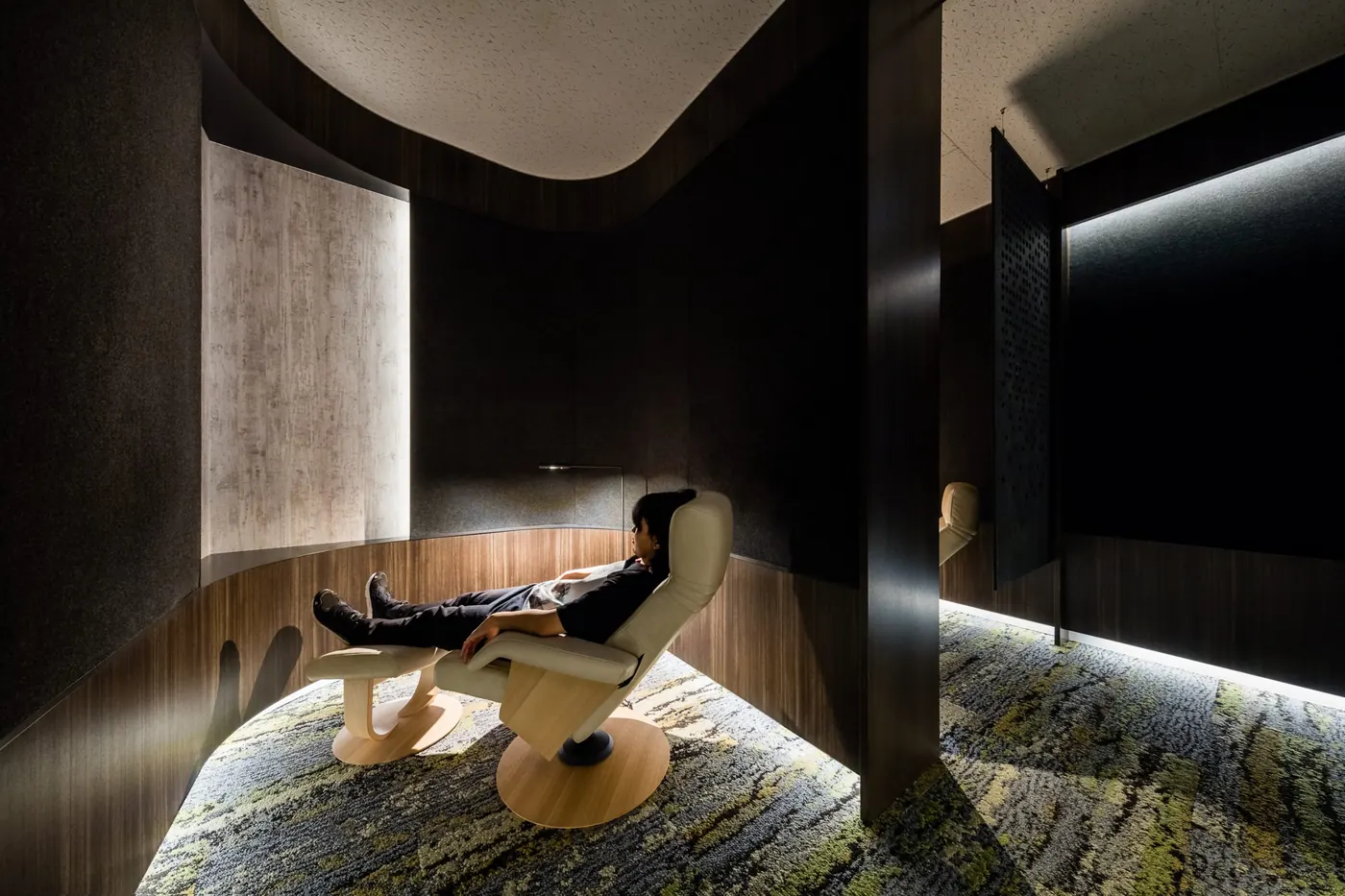
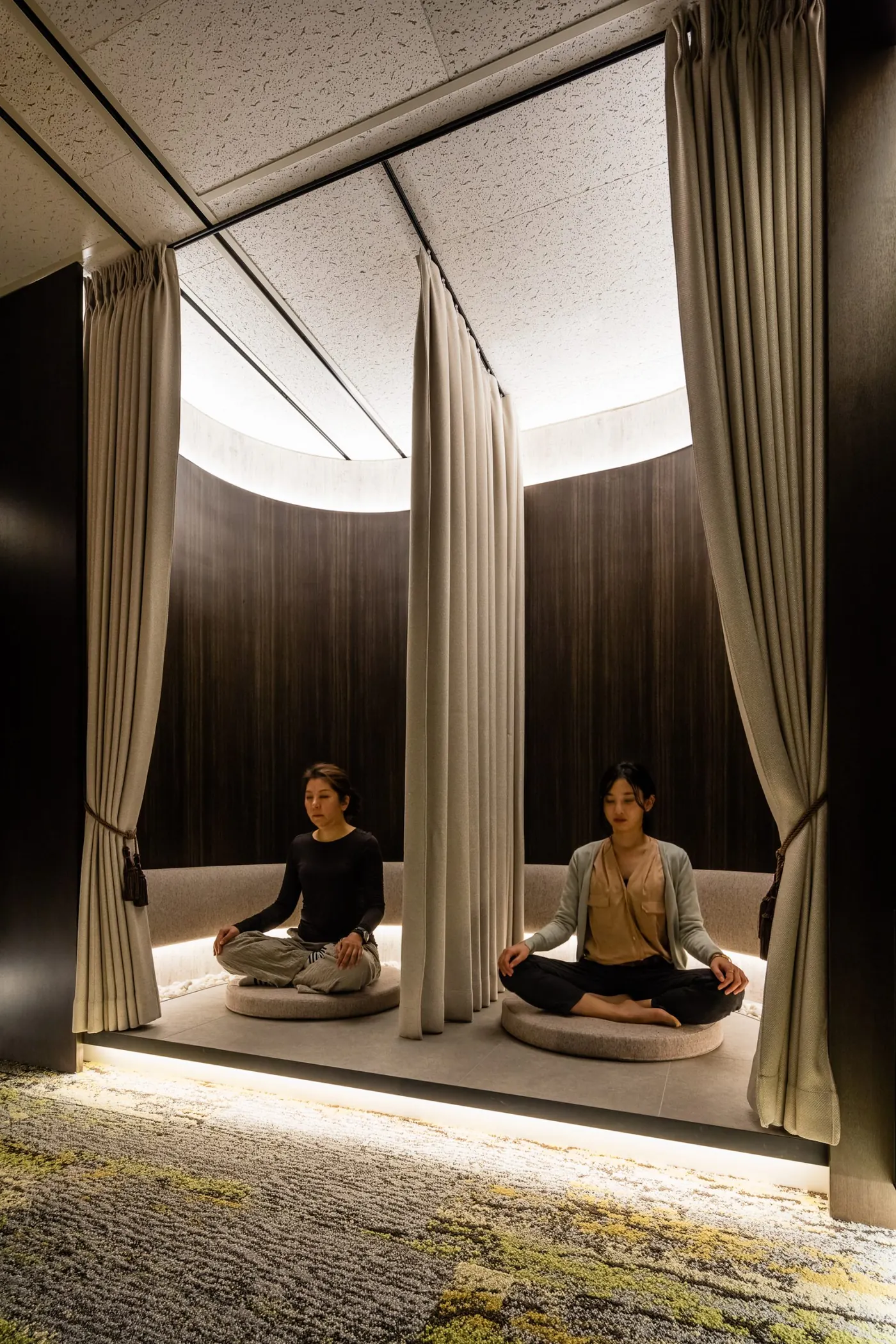
The renovation added places for body and mind. A massage room offers a free monthly session with a licensed therapist. The medical room has a full-time occupational physician and nurse, and runs mindfulness seminars, walking and quit-smoking programmes. The Digital Detox room is for stepping away from every screen; there is also a mini-putt corner, a meditation room and refresh corners.
05 · How they work
Care leave, Maven and a family day
Staff choose when and where to work, within their role. Leave for illness or family care is ten days a year; paid caregiving leave up to twenty working days; paid maternity leave of twenty weeks; paid parental or adoption leave of six weeks. The global Maven programme gives expert support in 35 languages, including Japanese, on fertility, pregnancy, parenting and menopause for any gender. Employee assistance counselling, childcare and elder-care concierges, a company health-insurance society, a benefit-points menu, and training from onboarding to LinkedIn Learning complete the picture. Clubs range from ikebana and kendo to surfing and mathematics, and once a year a Family Day thanks the people behind the staff.
