 JAPAN'S WORKPLACES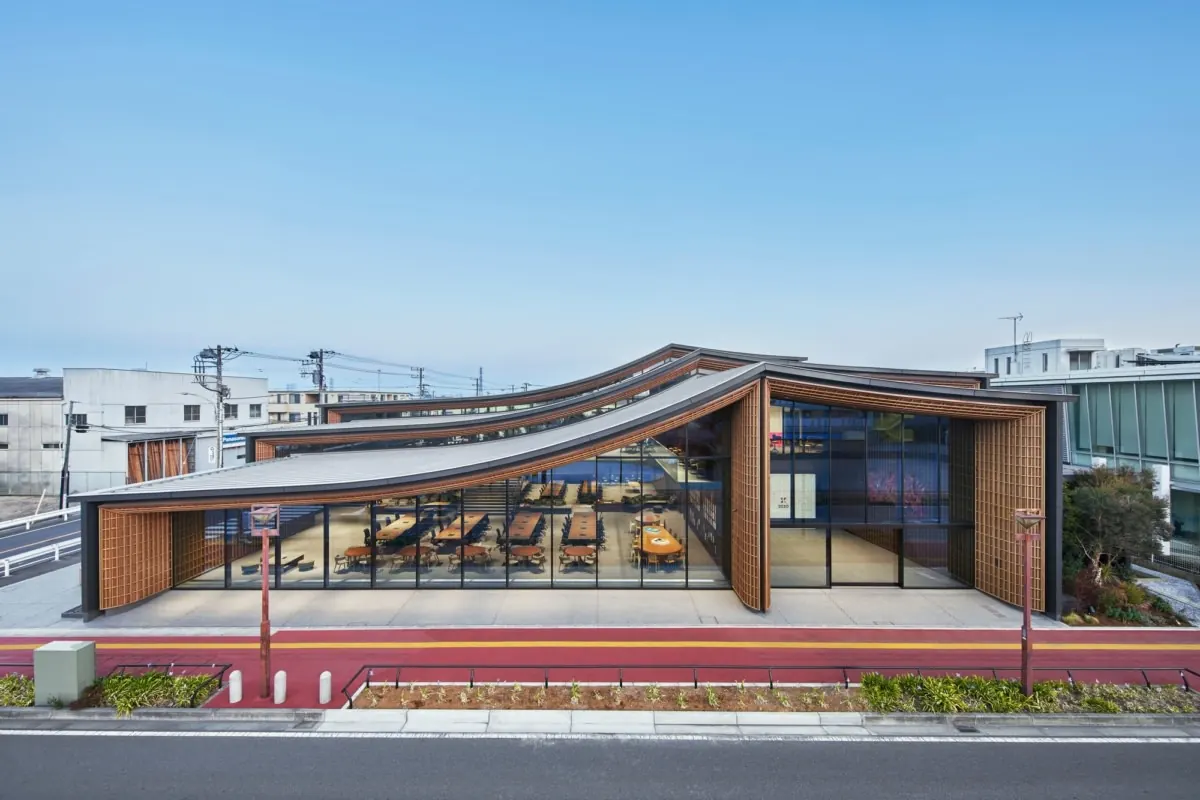
Concept
A “territorial” office that grows with the town
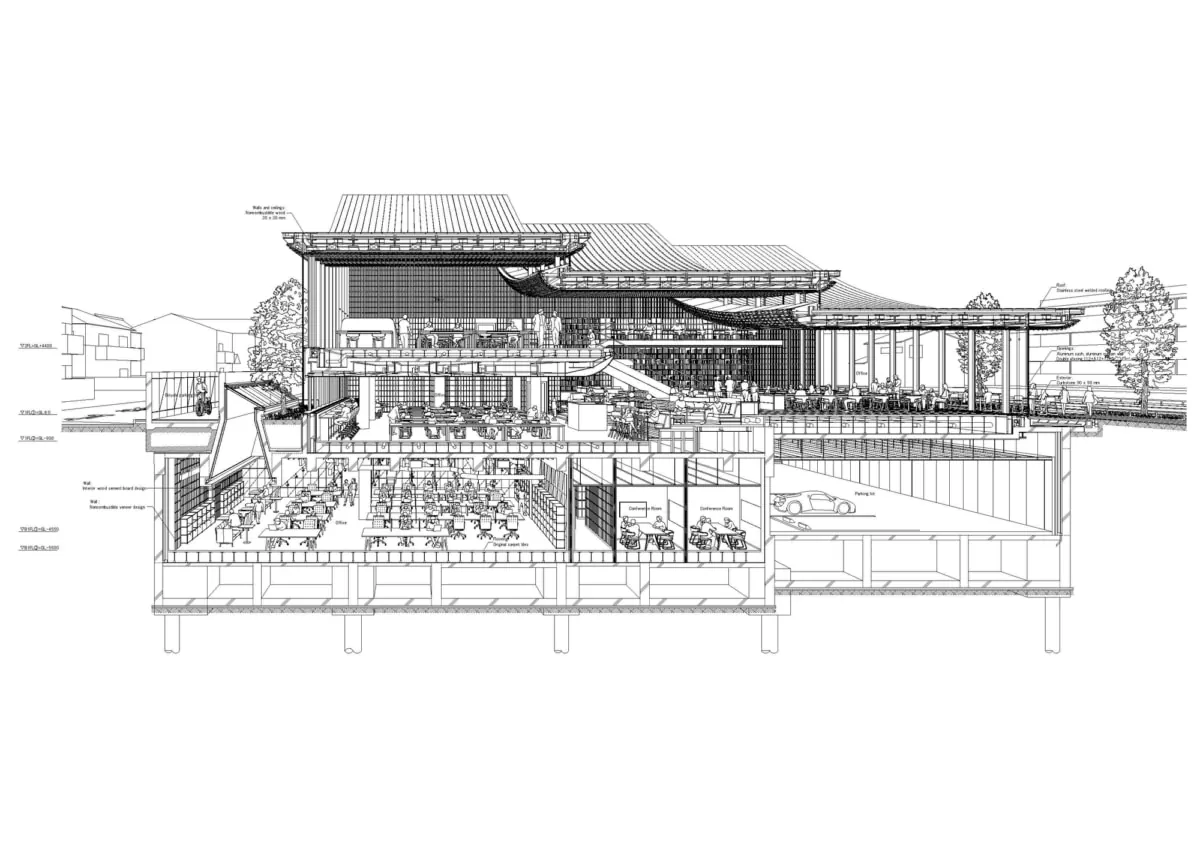
ZOZO calls it a ryōiki-gata office — an office defined by territory rather than by walls. Meals, exercise, childcare are not brought in-house; they are outsourced to the cafés, parks, nurseries and gyms of the neighbourhood. Staff go out, meet people and watch how the town dresses, and that is the best feedback a fashion company can get. So the building is compact: only the confidential work and meeting spaces sit above ground level, and everything else breathes with the street.
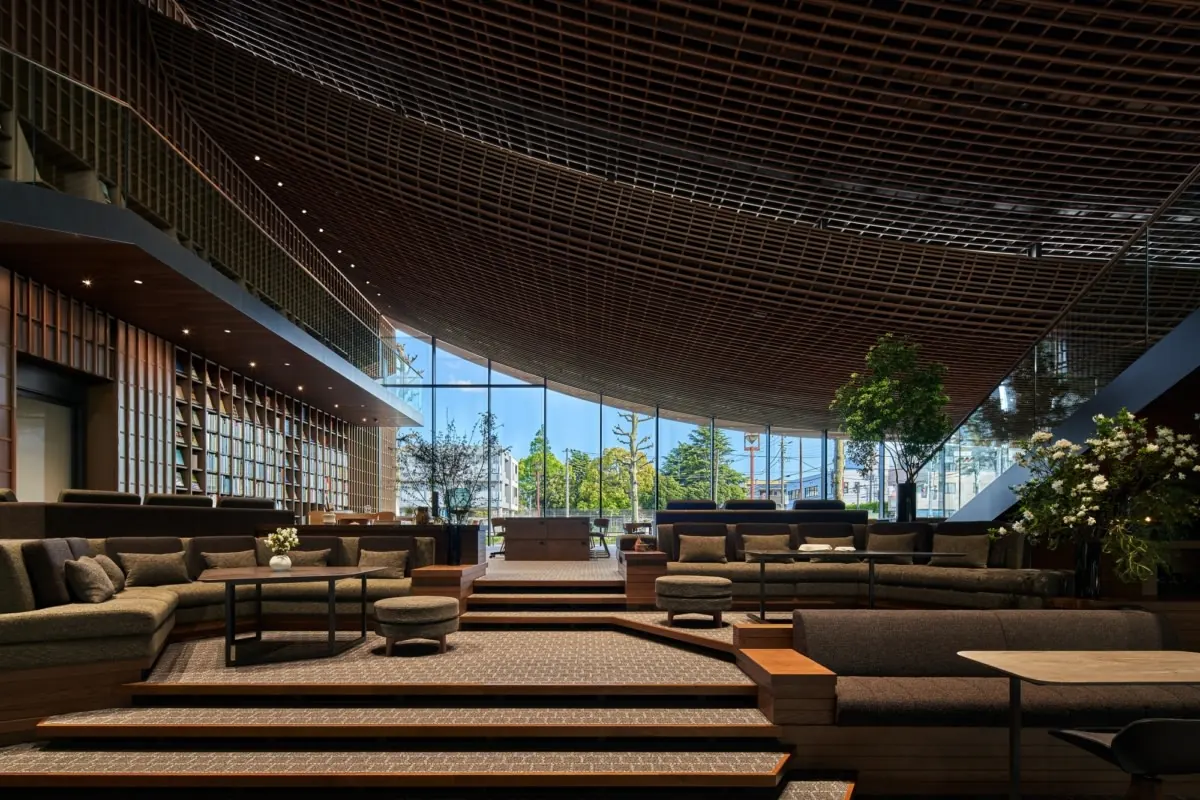
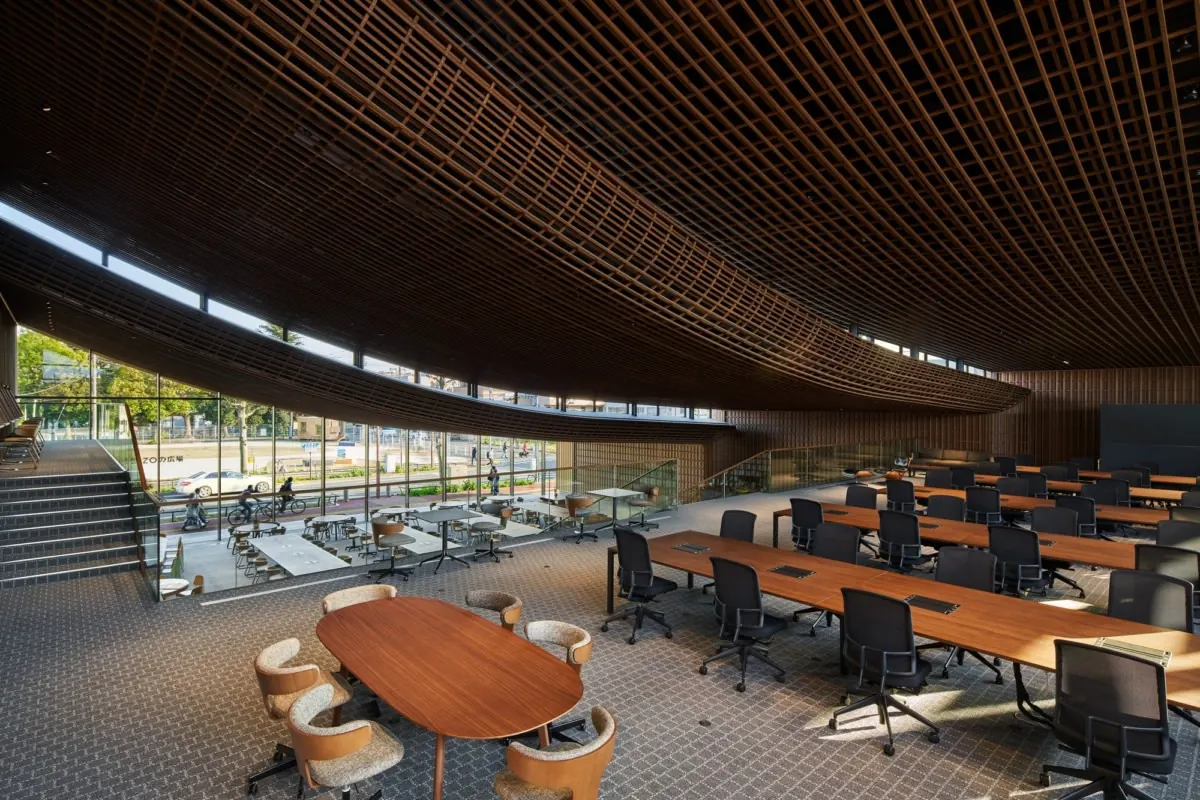
The other idea is comfort. Thin timber woven in three layers forms a roof and walls that sag like a great sheet of cloth and wrap the people inside — “architecture like comfortable clothing”, in the company’s own phrase. The building won the Good Design Award, the Nikkei New Office Award’s Creative Office prize, the JID Award grand prize and Chiba City’s urban culture grand prix.
01 · Reception
A building that belongs to the street
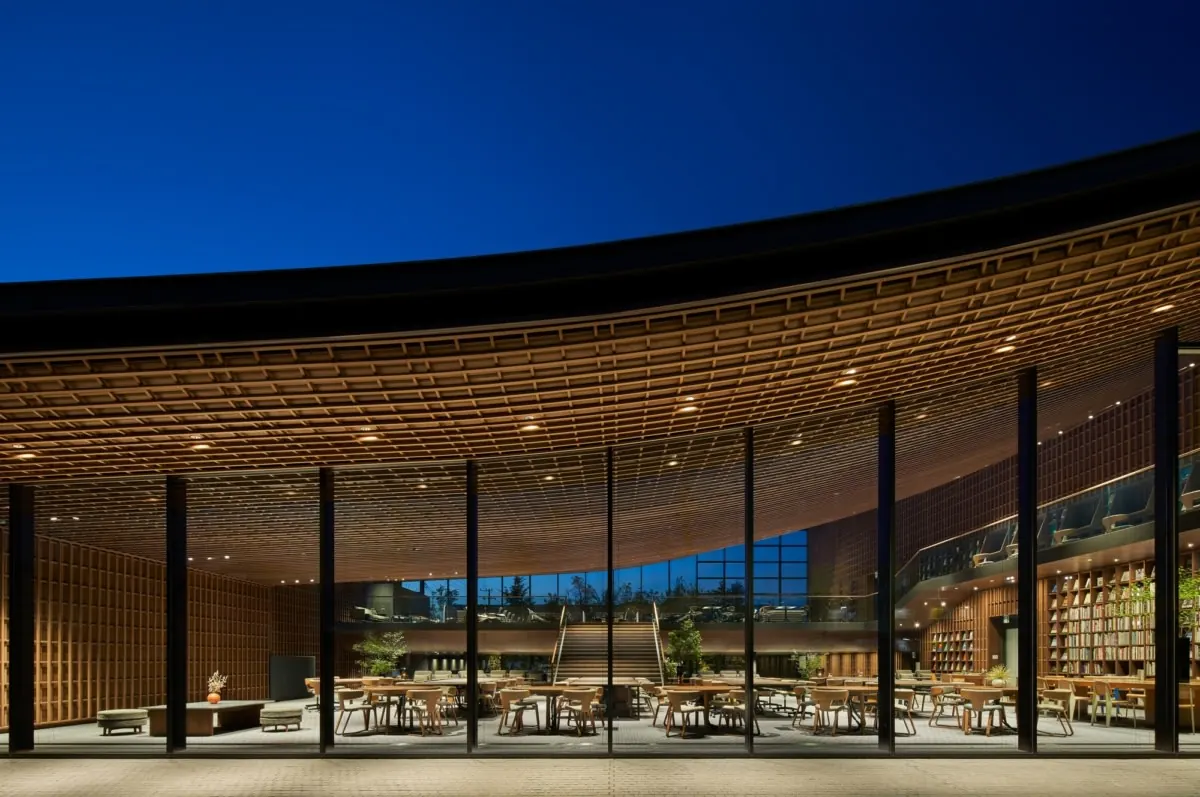
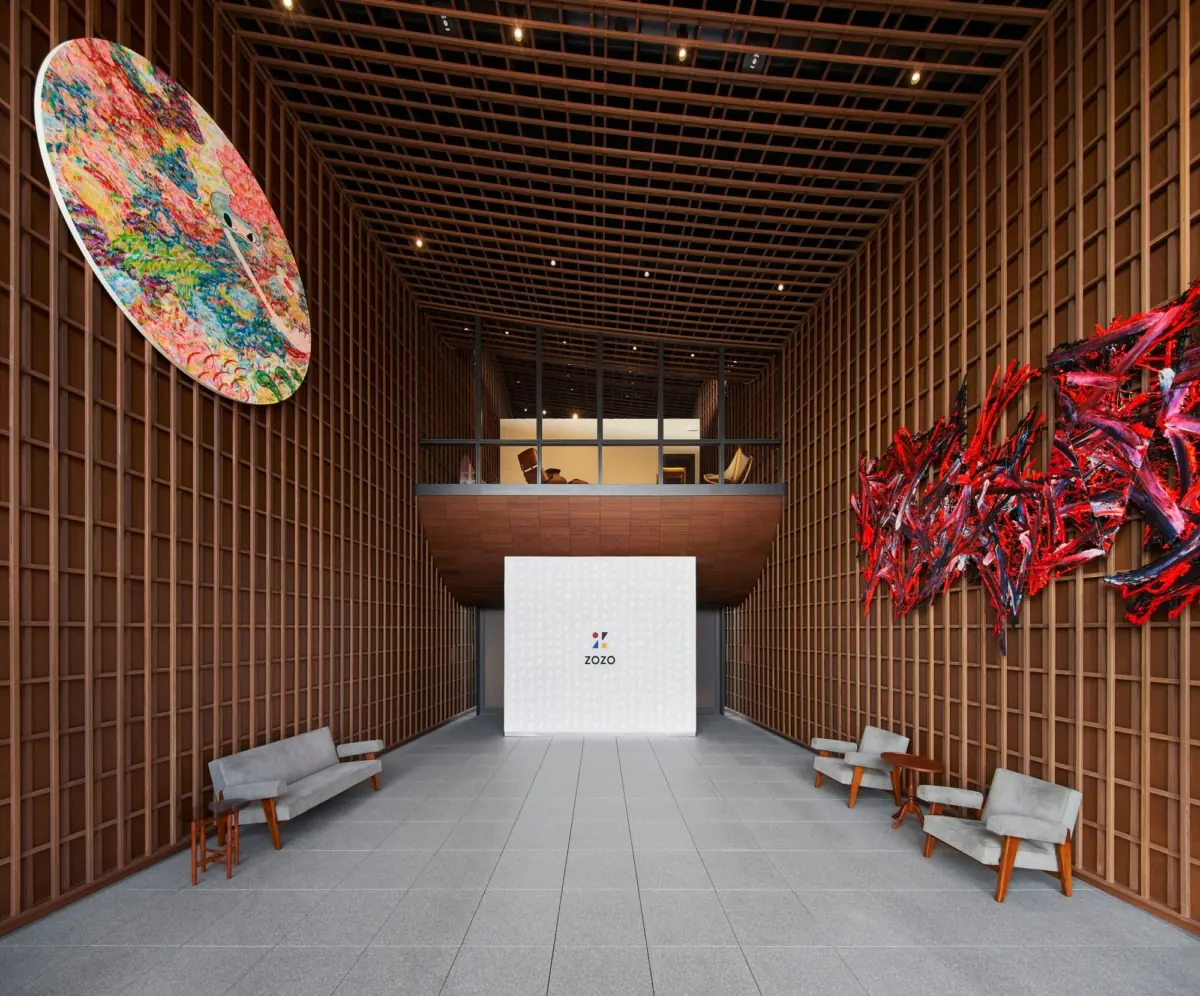
On the main-road side the building steps back to give the town a row of trees and a plaza. On the Gakuen-dōri side, between Chiba University’s gate and the station, a column-free space under a suspended roof and a deep overhanging eave welcome passers-by. “Fashion is born on the street now”: people at work can watch how pedestrians dress and move, and the entrance itself becomes ZOZO’s way of noticing things.
02 · Workspace
One roof, ceilings from 2 to 8 metres
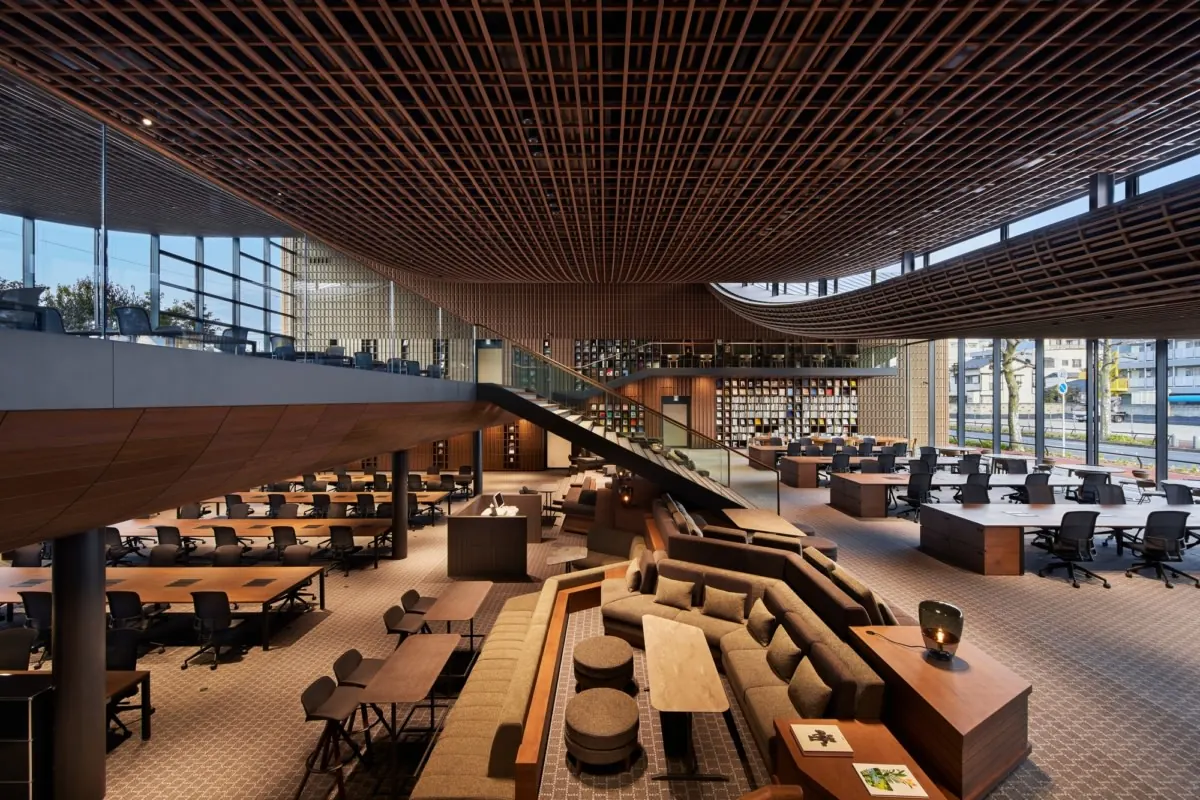
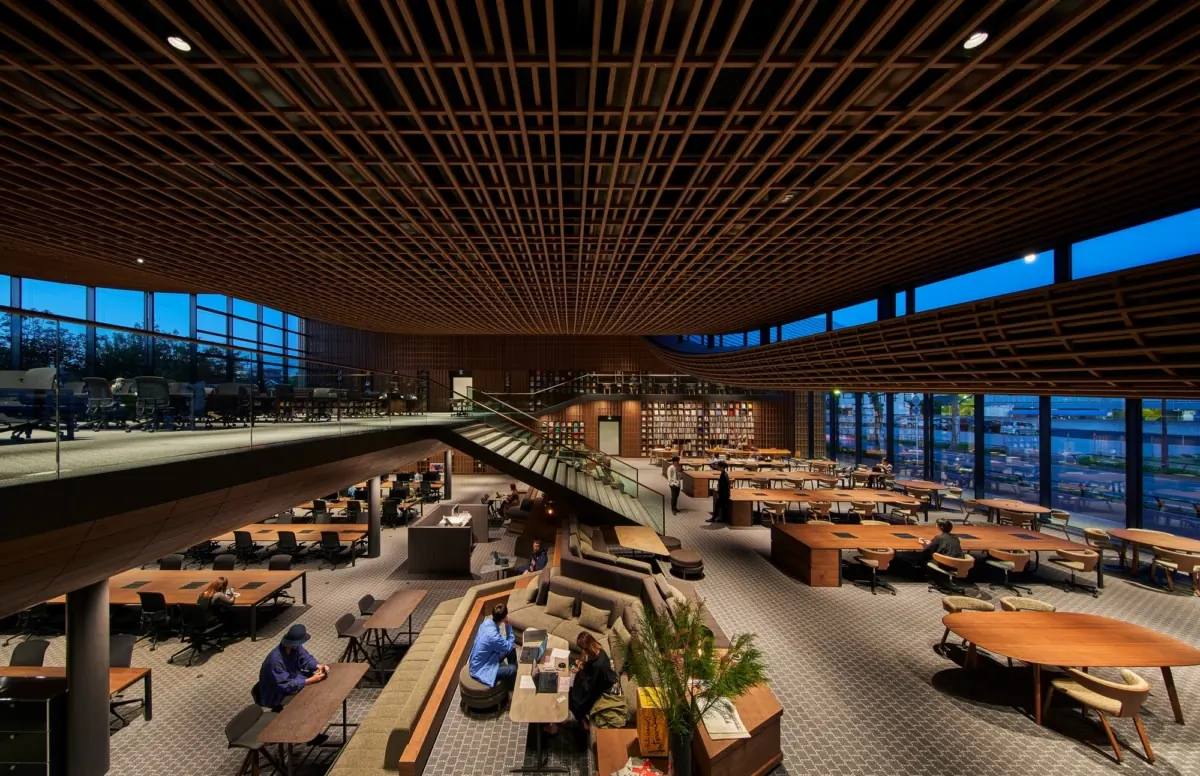
The main space is one room whose ceiling rises and falls between 2.0 and 8.0 metres, so the openness of an airport and the intimacy of a house sit in the same hall as a gradient. Floors and roof step past each other, creating shifts of eye level, comfortable distances and changing light; people choose where to sit by the day’s work. Light falls through the gaps between the three roof sheets. Beams only 350 mm deep make the column-free span possible. The carpet tiles copy the paving stones of the pavement outside; the original bentwood chairs, designed for the timber ceiling, went into production at Tendo Mokko. In summer cool air comes from non-combustible cardboard ducts in the roof; in winter warm air rises from the floor.
03 · Welfare
The town as welfare
The park is the break room, the gym is down the road, the nursery is the neighbourhood’s. ZOZO-kone gives staff discounts at restaurants and shops around the offices and logistics sites — a benefit that only a territorial office could offer. Beyond that: commuting paid up to ¥150,000 a month (flights and bullet trains included), an employee discount on ZOZOTOWN, club support, annual health checks, a retirement plan.
04 · How they work
Jigoto
Hybrid work — two office days and three remote for business teams, fully remote from anywhere in Japan for engineers; full flextime without core hours; side jobs by application; laptops and displays supplied. Conference travel, including abroad, is paid; AWS and Google Cloud are available for study at up to $100 a month; books are reimbursed; regular one-on-ones. Leave for family events regardless of a partner’s gender; up to a year’s leave for fertility treatment, for anyone; up to two hours’ shorter days to care for family, including pets and housemates; babysitter subsidies. Inventions and design work earn a bonus, and the Sōzō no Naname-ue Award celebrates ideas that are “ZOZO-like”.
